FOMO gets you onto the plane.
It is a reliable engine. The fear of missing out — on the experience, the destination, the photograph, the story you will be able to tell — has driven an enormous proportion of the world’s travel decisions for the last decade. It fills flight booking pages in January. Moreover, It fills Instagram in December. It is the reason most people go where they go and do what they do when they get there.
FOMO is not a bad motivator. It has taken people to places they would never have visited otherwise. It has expanded horizons and opened eyes and produced genuine wonder.
But here is what FOMO does to you once you land.
It follows you off the plane. It sits next to you at the hotel and whispers that you are staying in the wrong area, that the place you just ate at was not the one everyone recommends, that you have only three days and seventeen things on the list and you are falling behind.
FOMO cannot be in one place. It is always pointed at the next one.
In 2026 the global travel conversation is shifting around a simple counter-concept. Not a rejection of travel — a reorientation of it. The word being used in travel research and wellness circles is deliberately constructed as the opposite of what it is replacing.
Slow-mo.
Same syllables, reversed direction. While FOMO accelerates, slow-mo decelerates. And when FOMO fills the schedule, slow-mo empties it. While FOMO is always somewhere else, slow-mo is completely here.
And increasingly, the people who travel this way are coming back saying something the FOMO travellers cannot quite explain: they actually remember it.
What FOMO Travel Actually Produces
To understand what slow-mo is, it helps to be honest about what FOMO travel produces.
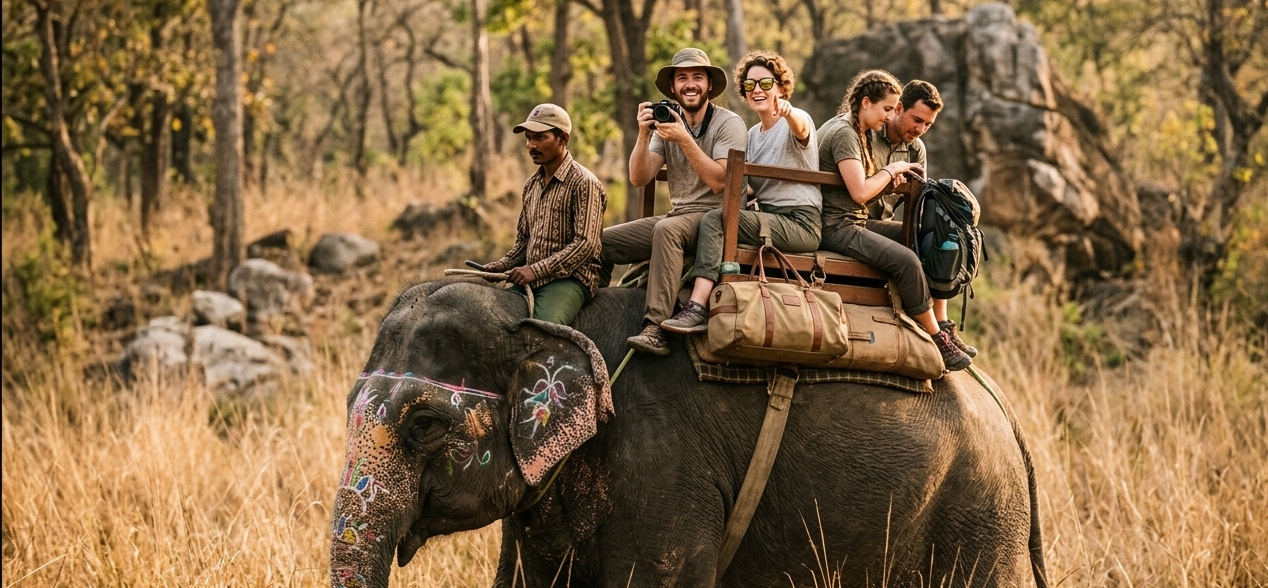
Think about a trip you have taken that was planned entirely around not missing things. Multiple cities, a different hotel every two nights, the famous landmark in the morning, the recommended restaurant at lunch, the sunset viewpoint in the evening, the night market after. Photographed throughout. Posted as it happened.
Now answer honestly: what do you actually remember?
For most people, the honest answer is: fragments. Individual images. Specific moments. But not the texture of any single place. Not the feeling of having been somewhere fully. Not the quality of being known by a place, even briefly, because you stayed long enough for it to stop being a backdrop and start being real.
FOMO travel is comprehensive and shallow. It covers the surface of many places and touches the depth of none. It produces content and exhaustion in roughly equal measure. And it leaves a specific aftertaste — the nagging sense that you were there but not quite present, that the camera was between you and the experience for much of it, that you came back with proof of having gone but not the thing the going was supposed to give you.
What Slow-Mo Actually Means
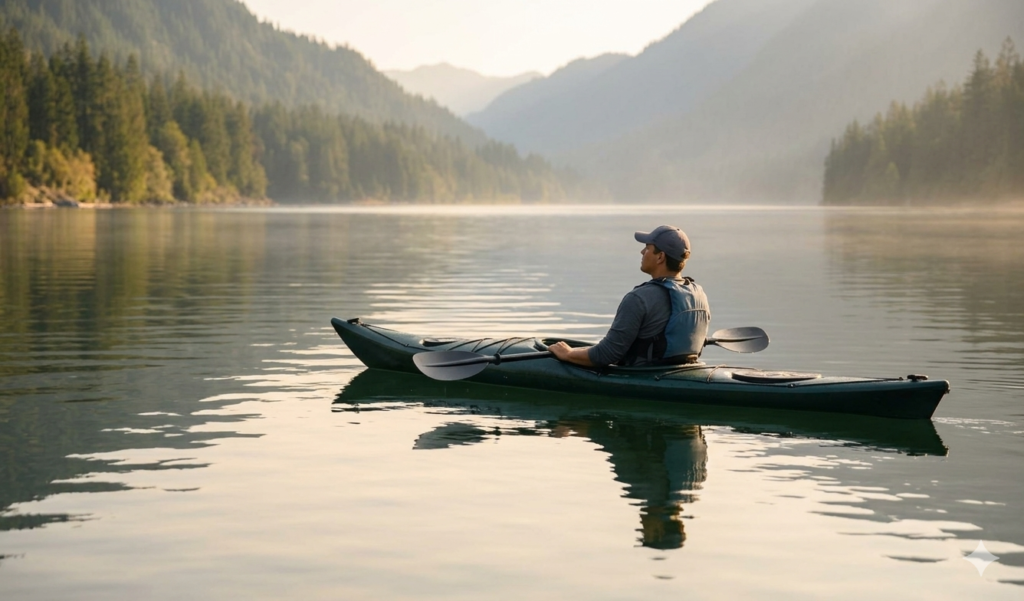
Slow-mo travel does not mean going nowhere. It does not mean travelling slowly in the literal sense of the word. It means travelling with a different relationship to time and place.
The defining features are simple.
Fewer places. One destination rather than five. One region rather than a country. The depth of that single place, rather than the breadth of many. Enough time to develop a routine — to know which bakery opens first, to find the path that runs along the ridge, to have a conversation with someone who is not a tourist.
Longer stays. The research consensus is consistent: it takes three days for most travellers to stop behaving like tourists and start behaving like temporary residents. The FOMO itinerary never allows that transition to happen. The slow-mo trip is designed around it.
Purpose over ticking. Slow-mo travel does not mean purposeless travel. It means travel oriented around depth rather than completion. You go to the tea estate not to photograph it and move on but to understand it — to walk it slowly, to talk to the person who picks the leaves, to learn something real about the place rather than collecting its image.
Present over content. The slow-mo traveller photographs less. Not because they care less about the place but because they are more in it — too present to be behind a lens, too absorbed to be composing a caption. The memories formed in that state of absorption are qualitatively different from the ones formed while managing a camera roll.
International Traveller’s 2026 wellness report notes that the most significant travel trend of the year is not a destination or an experience type but a pace: slow-mo is defining travel in 2026, with fewer safari camps but longer stays at each, allowing for a total, more mindful immersion.
The FOMO Problem in Indian Travel Culture
In India, FOMO travel is particularly ingrained — and for reasons that are worth understanding rather than simply criticising.
For many Indian families, a holiday is a significant financial event. When you save for months and take limited days off, the instinct to maximise — to see everything, do everything, get the most out of every hour — is completely rational. You did not come all this way and spend all this money to sit in one place and look at the same view for three days.
This instinct makes economic sense. But it has a cost that shows up in a different account.
The holiday becomes an exercise in efficient tourism rather than genuine experience. The family returns with photographs and fatigue. The children remember the bus, the waiting, the rush from one thing to the next, more vividly than they remember any single place. And the adults come back needing, as noted earlier, a holiday from the holiday.
The slow-mo reframe for the Indian context is not about spending more money — it is often cheaper to stay longer in one place than to move constantly. It is about a shift in what the holiday is for.
If the holiday is for efficient content collection, FOMO is the right operating system.
If the holiday is for genuine restoration, connection, and the creation of memories that last — slow-mo is.
FOMO vs Slow-Mo: The Real Differences
| FOMO Travel | Slow-Mo Travel | |
|---|---|---|
| Orientation | What am I missing? | What am I in? |
| Measure of success | Number of places visited | Depth of a single experience |
| Relationship to time | Always running out | Always enough |
| Photography | Constant, capturing everything | Occasional, capturing what matters |
| Memory quality | Fragments and images | Texture and feeling |
| Return feeling | Exhausted, vaguely unfulfilled | Restored, genuinely changed |
| Cost | Higher (multiple destinations, logistics) | Often lower (one place, longer stay) |
The Mindset Shift Underneath the Travel Shift
Slow-mo travel is not ultimately about travel. It is about a relationship with time.
FOMO is an anxiety response to abundance. When the world presents infinite options — infinite destinations, infinite experiences, infinite versions of how a trip could be spent — the mind responds with the anxiety of incompleteness. You can never see everything. You can never do everything. And so the awareness of what you are not doing haunts every moment of what you are doing.
Slow-mo is the decision to opt out of that frame entirely. To say: I am not trying to see everything. I am trying to be somewhere, fully, for long enough to be changed by it.
This is a mindset practice as much as a travel practice. It requires the same capacity for presence that meditation asks of you. The same willingness to be in what is here rather than reaching for what is somewhere else. The same trust that this — the one place, the ordinary morning, the unhurried afternoon — is enough.
It also requires something that is genuinely difficult for people shaped by productivity culture: the willingness to define a good day by how it felt rather than how much it contained.
A slow-mo day in the Western Ghats — one long walk, a meal eaten slowly, a long conversation, a view watched until it changed — contains almost nothing by the FOMO metric. By the human metric — the one that measures experience in depth rather than volume — it contains more than most people’s entire trips.
How to Shift From FOMO to Slow-Mo: A Practical Guide
Start with one rule: one place per trip. Not one city per country — one place. Allow yourself to become familiar with it. Return to the same street twice. Eat at the same stall on different mornings. Notice what changes between day one and day five.
Delete the master list. The list of things you should see in a place is not your list — it is everyone else’s aggregate list, optimised for completeness rather than experience. Make one list of things that genuinely interest you, in this place, right now. Follow that.
Build time into the itinerary for nothing. Two hours tomorrow with no plan. Not to find something to fill them — to let the place suggest what they become. This is where the unexpected thing always happens. The conversation with a stranger. The discovery of the lane that leads somewhere better than where you were going.
Put the phone away for one hour every day. Not offline — just away. In a bag, in a pocket, out of reach. Notice what the place looks and feels and smells like without the filter of whether it is worth photographing.
Give yourself permission to leave things undone. The monument you did not visit. The restaurant everyone recommended that you skipped. The experience you heard about but did not have time for. Let them go. The incompleteness is not failure. It is what makes you want to come back.
Incredible India’s tourism portal increasingly highlights immersive, longer-stay experiences — village homestays, heritage trails, and cultural deep-dives — that are essentially slow-mo travel structured for the Indian visitor. The infrastructure for this kind of travel exists. The mindset is the only thing that needs to change.
The Destinations That Reward Slow-Mo Most
Not every destination is equally suited to slow-mo travel. Some places reveal themselves over time. Others have given you everything they have by day two.
The places that reward slow-mo in India:
Varanasi, Uttar Pradesh — A city that takes at least a week to begin to understand. Every ghat has a different personality at a different time of day. The longer you stay, the more layers appear.
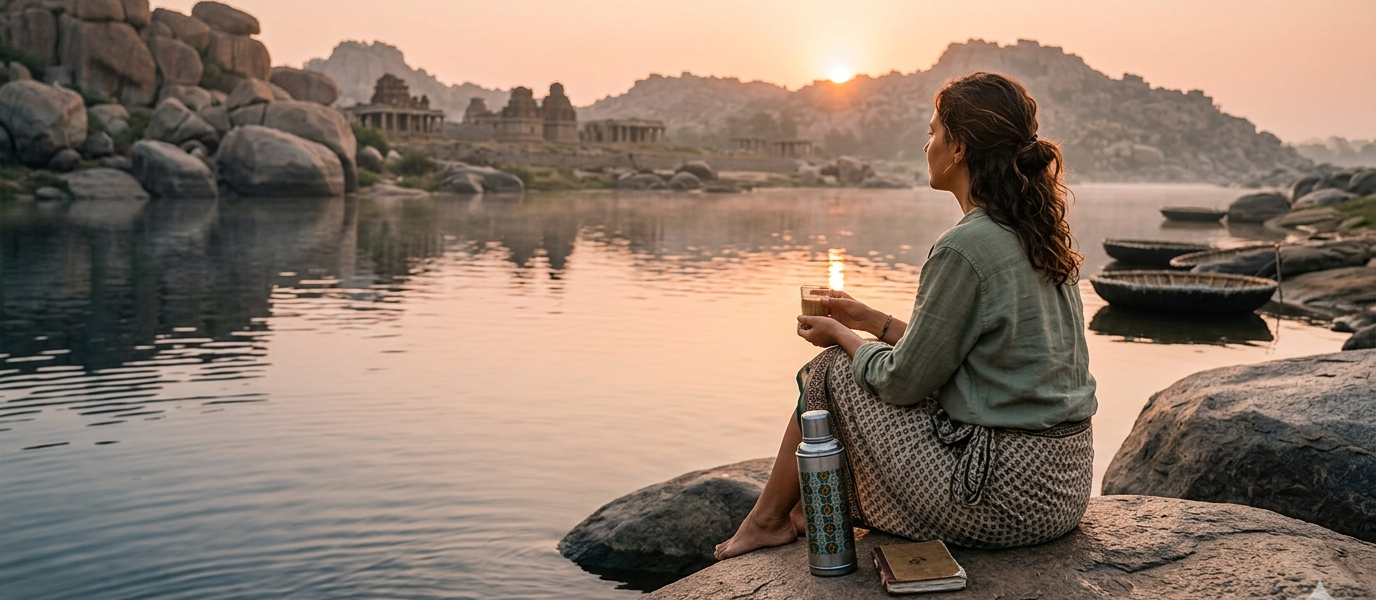
Hampi, Karnataka — The ruins are the obvious attraction. The landscape around them — boulders, banana groves, the Tungabhadra river — is what rewards the person who stays past the second day.
Pondicherry, Tamil Nadu — The French quarter, the ashram influence, the beach, the food, the quiet of early mornings in the old town. A week here feels like a month anywhere else. In the best way.
Sikkim — A state that moves at its own pace entirely. The monasteries, the mountains, the cloud-covered mornings. Slow-mo is not a travel choice in Sikkim. It is the only mode the place accepts.
Gokarna, Karnataka — Already mentioned as a reset-jetter destination. Equally valid as slow-mo territory. The beaches south of the main town reveal their character only to the people who stay past the weekend.
A Final Word
FOMO will always get you onto the plane. That is fine. It has done good work.
But the people who come back from travel genuinely changed — who carry something from the experience that lasts past the Instagram posts and the camera roll — are almost never the people who saw the most things. They are the people who were somewhere, fully, for long enough for it to matter.
Slow-mo is not a travel trend. It is a life orientation that travel happens to make visible. The same choice — depth over breadth, presence over coverage, being here rather than reaching for elsewhere — applies to every domain. To work, to relationships, to the experience of an ordinary Tuesday in your own city.
The question FOMO asks is: what am I missing?
The question slow-mo asks is: what is actually here?
One of those questions has a satisfying answer.
You will not remember everywhere you went. You will remember the places where you were fully present. Go fewer places. Be in them completely.
Quick Recap
- FOMO travel produces comprehensive, shallow experiences — covering the surface of many places without touching the depth of any
- Slow-mo is the 2026 counter-trend: fewer places, longer stays, purpose over ticking, present over content
- For Indian travellers, the instinct to maximise a trip is economically rational but has a high experiential cost
- Slow-mo is often cheaper than FOMO travel — one destination at depth costs less than five at the surface
- The mindset shift underneath: define a good day by how it felt, not how much it contained
- Destinations that reward slow-mo in India: Varanasi, Hampi, Pondicherry, Sikkim, Gokarna
Read next: [Reset-Jetter: Why Your Next Holiday Should Have Zero Itinerary — link here] | [Skilliday: Europe’s Hottest Travel Trend India Should Steal — link here]