Category: Businesses That Are Changing the World | The Mind Pole
At 10pm on March 21, 1977, Xerxes Desai picked up a phone. The call lasted less than a minute.
His associate Anil Manchanda had shortlisted five business ideas. The best one, he said, was watches.
That sentence set the entire Titan by Tata brand story in motion.
It would take ten more years — mountains of bureaucracy, internal scepticism, and the personal backing of JRD Tata himself — before the first Titan watch left the factory floor.
Today, Titan Company is worth over $37 billion. It generates annual revenue of nearly ₹88,000 crore. And it owns some of India’s most trusted brands — Tanishq, Fastrack, CaratLane, Titan Eye+, Taneira, and SKINN. The company has transformed not once but three times — from watchmaker to jewellery giant to full-scale lifestyle conglomerate.
But the most remarkable part of the Titan by Tata brand story is not the destination. It is how an idea conceived under the Licence Raj, dismissed by sceptics, and built against every structural disadvantage became the gold standard for Indian consumer brand-building.
India in 1977: A Market Waiting to Be Imagined
To understand what Titan achieved, you first need to understand the India it was born into.
In the late 1970s, India’s watch market belonged almost entirely to one company: HMT — Hindustan Machine Tools. Government-owned. Reliable. Affordable. And utterly without aspiration.
In fact, if you wanted a premium watch, your only option was to import it from Switzerland. The idea that India could build a world-class, design-forward, quartz timepiece was, consequently, considered faintly ridiculous by almost everyone in the industry.
Moreover, India was living under the Licence Raj. Every business decision — from production capacity to pricing — required a government licence. As a result, building a new consumer brand in this environment meant navigating layers of bureaucracy before a single blueprint was drawn.
Most people would have stopped there.
Xerxes Desai was not most people but another founder who had to wait a decade before the first launch
The Man Who Built Titan
Desai was, by any measure, an extraordinary figure.
He studied politics, philosophy, and economics at Oxford. He joined the Tata Group as a management trainee in 1961. Over the following decades, he helped build the Taj Hotels chain — including the iconic tower extension of the Taj Mahal Hotel in Mumbai.
When the watch idea came to him in 1977, Desai saw something India’s consumer market had not yet articulated. A watch is never purely functional. It is an object of desire. A statement worn on the wrist. A signal of aspiration and personality.
The India of the 1980s was aspirational, newly urban, and increasingly image-conscious. It was ready for exactly that product. It simply did not exist yet.
Moreover, Desai had the most important backer imaginable: JRD Tata. Then Chairman of Tata Sons, Tata championed The Watch Project from its earliest days. He did so against considerable internal scepticism. When a foreign watchmaker questioned whether Indians could manufacture world-class watches, that suggestion struck a nerve. As documented in the Tata Group’s own account of the company’s forty-year journey, overcoming that scepticism became one of the founding team’s defining motivations.
In July 1984, after seven years of groundwork, Titan Watches Limited was formally incorporated. It was a joint venture between Tata Industries and the Tamil Nadu Industrial Development Corporation (TIDCO). The factory went up in Hosur — a small industrial town in Tamil Nadu. Bengaluru became the corporate headquarters.
Building a Workforce From Zero
One of the most overlooked chapters of the Titan story is how the company built its human foundation.
Titan needed hundreds of workers capable of the extraordinarily precise, intricate work of watch assembly. Rather than poaching experienced talent from competitors — there were barely any — the company sent teams into schools across small towns and remote villages in Tamil Nadu, recruiting young people aged 17 and above who had never worked in manufacturing.
For every 100 applicants, only three were selected. The standards were extraordinary for the era.
Furthermore, many of these recruits had never left their home villages. Titan set up transit homes with foster parents to ease the transition. It built a township around the Hosur factory with schools, healthcare, and community facilities. In 2001, Xerxes Desai personally founded a school for the children of Titan employees — an institution he continued nurturing until the end of his life.
This compassion was not accidental. It was the culture Desai deliberately built — one that would later extend to the Karigar Centres established for jewellery artisans, offering food, accommodation, health checkups, yoga, and sports facilities to craftspeople whose skills were the foundation of Tanishq’s success.
The First Watch and the Mozart Moment
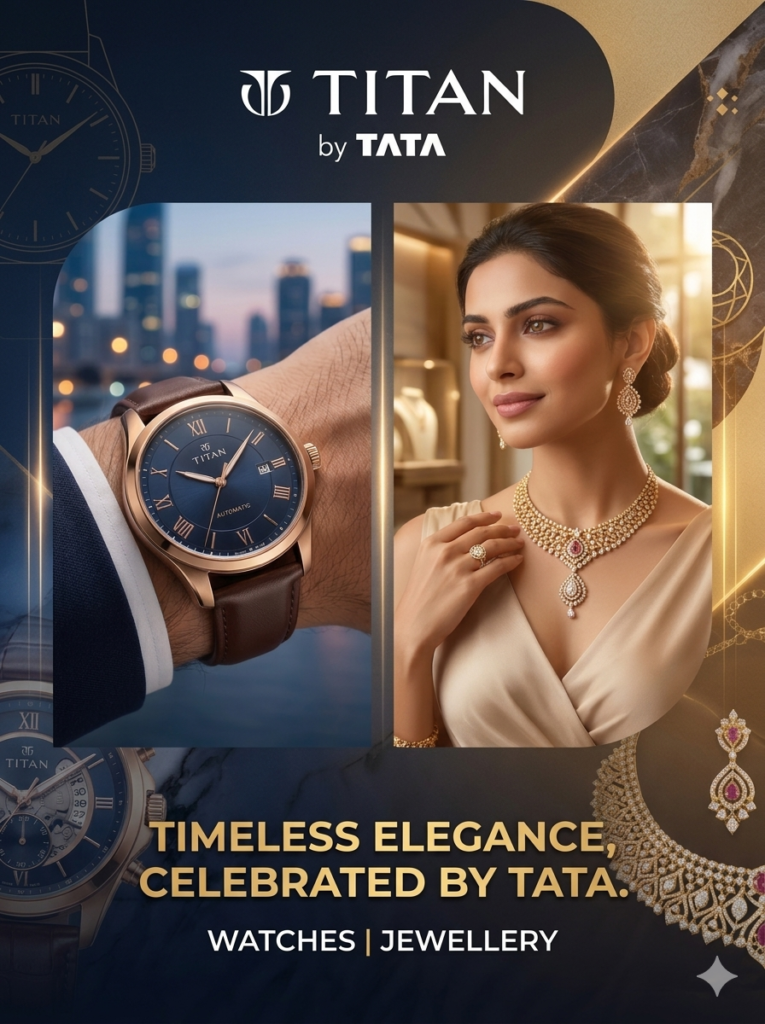
The first Titan watch left the Hosur factory in February 1987. By December of that same year, Titan had opened its first dedicated showroom at Safina Plaza in Bengaluru.
Within two years, the company had sold one million watches.
But what made Titan’s early success remarkable was not just the product — it was the marketing. Desai understood instinctively that Titan was selling aspiration, not timepieces. When the advertising agency Ogilvy presented the first television campaign, it featured a piece of music Desai approved almost immediately: Mozart’s 25th Symphony.
In his own words: “Of all the symphonies of Mozart, this one has a tremendous amount of enthusiasm and spirit about it.”
That melody became one of the most recognisable advertising signatures in Indian history. Consequently, over 35 years later, you can still hear it in Titan Raga’s advertisements. The brand had embedded itself not just in Indian wardrobes but in Indian memory.
Through the 1990s, the Indian economy liberalised. Household incomes rose. And Titan moved with both.
In fact, what the company built during this period was remarkable — a sub-brand architecture that mapped India’s aspirations with unusual precision.
Fastrack for rebellious youth. Raga for modern Indian women. Nebula for luxury. Sonata for the mass market.
Moreover, each brand spoke to a completely different Indian consumer. And yet, none of them diluted the parent. Instead, together they made Titan feel simultaneously aspirational and accessible — a combination very few Indian brands have ever achieved.
Tanishq: Disrupting the Family Jeweller
By 1994, Titan had dominated the organised watch market. Desai, however, was already looking at the next unorganised market ripe for disruption: Indian jewellery.
India’s jewellery market at the time was almost entirely in the hands of local, independent family jewellers — trusted for generations through personal relationships, but deeply opaque on questions of gold purity, pricing, and quality assurance. Consumers had no reliable way to verify what they were being sold.
Titan saw an opportunity. In 1996, Tanishq was launched — a name that Desai himself coined by taking the word “nishka” (meaning coin), replacing the “ka” with “q”, and affixing “Ta” for Tata. The resulting name was so enigmatic and memorable that it is not uncommon today to find Indian children named after the jewellery brand.
However, Tanishq’s early years were difficult. The brand initially launched with 18-karat gold jewellery — a purity standard more common in Europe — which found limited acceptance among Indian consumers accustomed to 22-karat pieces. The first years involved significant losses and considerable internal pressure to abandon the venture.
Instead of retreating, Tanishq doubled down on its core differentiator: trust through transparency. In 1997, the brand unveiled the Karatmeter — a machine that could accurately measure the purity of gold in a non-invasive way, right in the store. Tanishq’s advertising campaign, famously declaring “Beware, there is a thief in the family,” invited consumers to test their existing jewellery and discover the truth about what they actually owned.
It was a bold move. As a result, it worked. Tanishq rapidly earned a reputation as the honest jeweller in a market built on opaque trust — and that reputation became its most valuable asset.
The Numbers That Tell the Titan by Tata brand story
Today, Tanishq is India’s largest branded jeweller. It operates over 1,091 exclusive stores across India. Moreover, it is supplemented by CaratLane’s{:target=”_blank”} digital-first model, Mia for working women, and Zoya for luxury buyers. The jewellery division alone accounts for approximately 85% of Titan’s total revenue.
The overall numbers for FY2026 are, in fact, extraordinary. Total revenue reached ₹87,584 crore — up nearly 45% over the previous year. Earnings hit ₹5,073 crore, up 52%. Consequently, the company’s market capitalisation now stands at approximately $37.6 billion, making it one of the most valuable consumer companies in India.
Furthermore, Titan’s retail presence has expanded to over 2,500 stores across 400+ towns and cities. International expansion is accelerating too. Tanishq opened its eighth US store in Tysons, Virginia, in December 2025. Additionally, Titan Eye+ expanded to the UAE with new locations in both Dubai and Sharjah.
Perhaps most remarkably, 25% of Titan’s FY2025 sales were digitally influenced. That is an extraordinary figure for a jewellery business. After all, jewellery purchases are traditionally among the most tactile and personal decisions a consumer makes. And yet, one in four Titan customers now begins that journey online.
Beyond Jewellery: The Lifestyle Conglomerate
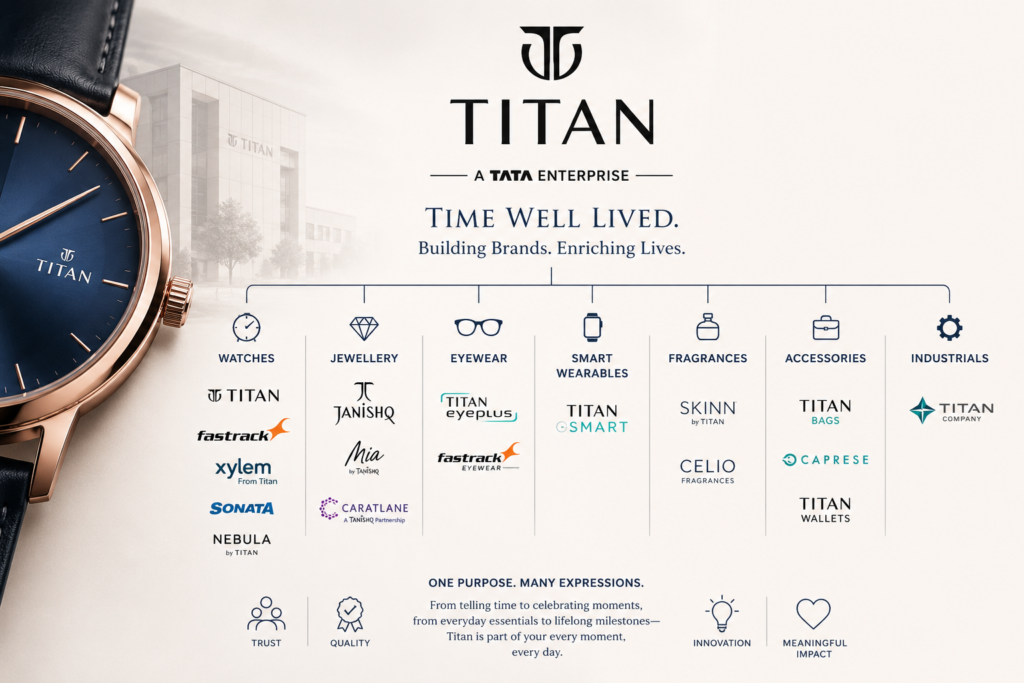
The Titan by Tata brand story did not stop at jewellery.
Over the past decade, Titan has systematically entered new lifestyle categories. Each time, it targeted the same kind of market — fragmented, unorganised, and ripe for disruption. And each time, it applied the same formula.
Design excellence. Trust through transparency. Branded retail experience.
Titan Eye+ brought that same disruption to Indian eyewear. The market was previously dominated by small, independent opticians with limited quality assurance. As a result, consumers had little way to verify what they were getting. Today, Titan Eye+ is one of India’s largest optical retail chains.
Taneira, launched in 2017, applied the same model to handloom textiles. It is one of India’s most fragmented and artisan-dependent industries. Furthermore, it had never seen a branded retail experience at scale. Taneira changed that — reviving traditional weaving while bringing modern standards to the category.
Meanwhile, SKINN entered the Indian fragrance market. IRTH addressed women’s fashion bags. Fastrack extended from watches into sunglasses, bags, and accessories. In other words, Titan was no longer a watch company, or even a jewellery company. It was becoming a full lifestyle platform.
In 2023, Titan acquired the remaining stake in CaratLane for ₹4,621 crore. Consequently, it fully internalised the digital jewellery platform that has become essential to reaching younger Indian consumers — those who discover and research jewellery online before ever entering a store.
Most recently, Titan acquired a 67% stake in Damas — a leading jewellery retailer in Dubai. That move, above all, underscores the company’s ambition to carry Indian jewellery craftsmanship to international markets.
The Lesson Titan Teaches Every Entrepreneur
Looking back across four decades of Titan’s journey, several lessons stand out with unusual clarity.
First, patience is a competitive advantage. The idea that became Titan was conceived in 1977. The first watch was launched in 1987. Ten years of bureaucracy, internal scepticism, and technical groundwork — without a single product sold. Most companies would have abandoned the project long before the factory was built. Titan’s founders understood that the size of the opportunity justified the length of the preparation.
Second, trust is a business model. Both Titan’s watch business and Tanishq succeeded not primarily through product superiority but through radical transparency in markets built on opacity. The Karatmeter was not just a machine — it was a declaration of values that the market rewarded with loyalty spanning generations.
Third, aspiration is universal but not uniform. Titan’s sub-brand architecture — Fastrack for youth, Raga for women, Nebula for luxury, Sonata for value — demonstrated a sophisticated understanding that India is not one consumer market but many, and that the same company can serve all of them without losing coherence.
Fourth, compassion compounds. The care Titan showed for its factory workers in 1987, its karigars in the 1990s, and the communities surrounding its manufacturing facilities was not marketing. It was culture. And that culture became the foundation of a brand that Indian consumers have trusted across three generations.
Ultimately, Titan is proof that it is possible to build a world-class Indian consumer brand — not by importing a foreign formula, but by understanding India deeply enough to serve it in ways no foreign competitor could replicate. Another Indian company that disrupted an unorganised market
Key Facts at a Glance
| Detail | Info |
|---|---|
| Founded | July 26, 1984 |
| Founded by | Xerxes Desai, backed by JRD Tata |
| Joint Venture | Tata Industries + TIDCO |
| First Watch | February 1987, Hosur factory |
| FY2026 Revenue | ₹87,584 crore (~$10.5 billion) |
| Market Cap | ~$37.6 billion |
| Key Brands | Tanishq, Fastrack, CaratLane, Titan Eye+, Taneira, SKINN, Zoya, Mia |
| Retail Stores | 2,500+ across 400+ towns |
| Jewellery Revenue Share | ~85% of total |
| International | US (8 Tanishq stores), UAE, Dubai (Damas) |
| Xerxes Desai | Passed away 2016, aged 79 |
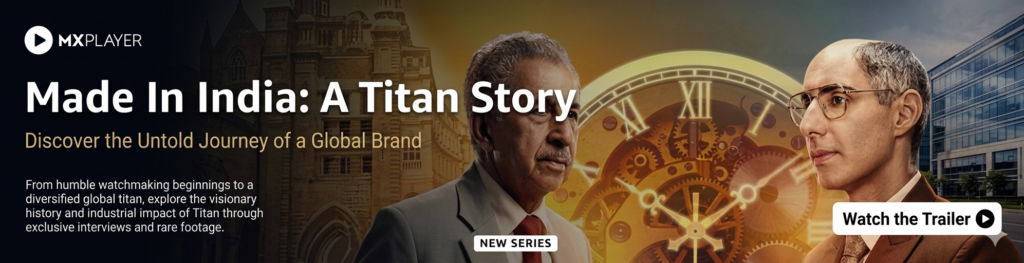
Now Streaming: Made in India — A Titan Story
If reading this has sparked your curiosity about Titan’s journey, there is now a remarkable way to experience it visually.
On June 3, 2026, Amazon MX Player premiered Made in India: A Titan Story — a six-episode biographical drama directed by Robbie Grewal. It is adapted from Vinay Kamath’s book Titan: Inside India’s Most Successful Consumer Brand. Moreover, the series is available to stream completely free — no subscription required — across mobile devices, connected TVs, Prime Video, Fire TV, JioTV, and Airtel Xstream.
The casting is inspired. Jim Sarbh plays Xerxes Desai with quietly rebellious energy that fits the role perfectly. In his own words, Desai was “someone unafraid to challenge convention and imagine what didn’t yet exist.” Meanwhile, the legendary Naseeruddin Shah plays JRD Tata. His portrayal of Tata’s quiet confidence and visionary mentorship has, consequently, drawn particular praise from critics.
The series follows Titan’s journey from a humiliating encounter with global watchmakers in the late 1970s. It moves through boardroom battles, financial crises, and creative breakthroughs. Ultimately, it arrives at the moment India produced its first world-class quartz watch. Furthermore, it does not shy away from the personal costs — the friendships strained, the careers risked, and the moments where the entire dream nearly collapsed before it reached the factory floor.
Critical reception has been genuinely warm. In fact, the Hollywood Reporter India called it “the feel-good watch of the year.” Filmfare awarded it 4 stars. Additionally, Bollywood Hungama gave 4 stars, calling it “a brilliantly made show that tells a fascinating Titan by Tata brand story not many are aware of.”
In short, if you want to understand what it actually felt like to build Titan — the doubt, the setbacks, the breakthroughs — this series is essential viewing.
Watch it free on Amazon MX Player → Made in India: A Titan Story
Final Thought
A phone call at 10pm. A seven-year battle through the Licence Raj. A factory staffed by teenagers from Tamil Nadu villages who had never left home. A melody from Mozart that became the soundtrack of Indian aspiration. A jewellery machine that told consumers the truth about what they owned.
Titan by Tata brand story is not glamorous in the way that Silicon Valley origin stories are glamorous. There were no viral launches, no billion-dollar funding rounds, no overnight sensations. Instead, there were decades of patient work, principled decisions, and a deep, abiding belief that Indian consumers deserved world-class products built with Indian hands.
Four decades later, that belief has produced one of the most valuable and most trusted consumer companies on the subcontinent.
At The Mind Pole, we believe the businesses that truly change the world are rarely the loudest ones in the room. Sometimes, the most powerful stories begin with a quiet phone call at 10pm.
Time does not wait for anyone — but, as Titan has proved, it can indeed be changed.