Category: Businesses That Are Changing the World | The Mind Pole
Imagine a company that was nearly bankrupt in 2008, failed its first three rocket launches, and had to beg investors to stay alive — only to become the most valuable company ever to go public, SpaceX IPO 2026 worth more than $1.75 trillion.
And yet, that is exactly the SpaceX story. Right now, in June 2026, it is happening in real time.
A Dream That Almost Died on the Launchpad
In 2002, Elon Musk founded Space Exploration Technologies Corp — SpaceX — with one audacious goal: make humanity a multi-planetary species. At the time, he had made $180 million selling PayPal. He spent almost all of it on rockets.
The first three launches of the Falcon 1 rocket failed. By 2008, the company had burned through its funds and Musk himself was financially ruined. In a now-famous moment, he split his last personal reserve between SpaceX and Tesla, knowing either — or both — could collapse.
Against all odds, the fourth launch succeeded. NASA noticed. As a result, a $1.6 billion contract followed, and SpaceX was saved.
Moreover, what happened next reshaped an entire industry.
How SpaceX Made Rockets Cheap
Before SpaceX, launching a satellite into orbit could cost $200 million or more. That price tag meant only governments and the world’s largest corporations could access space.
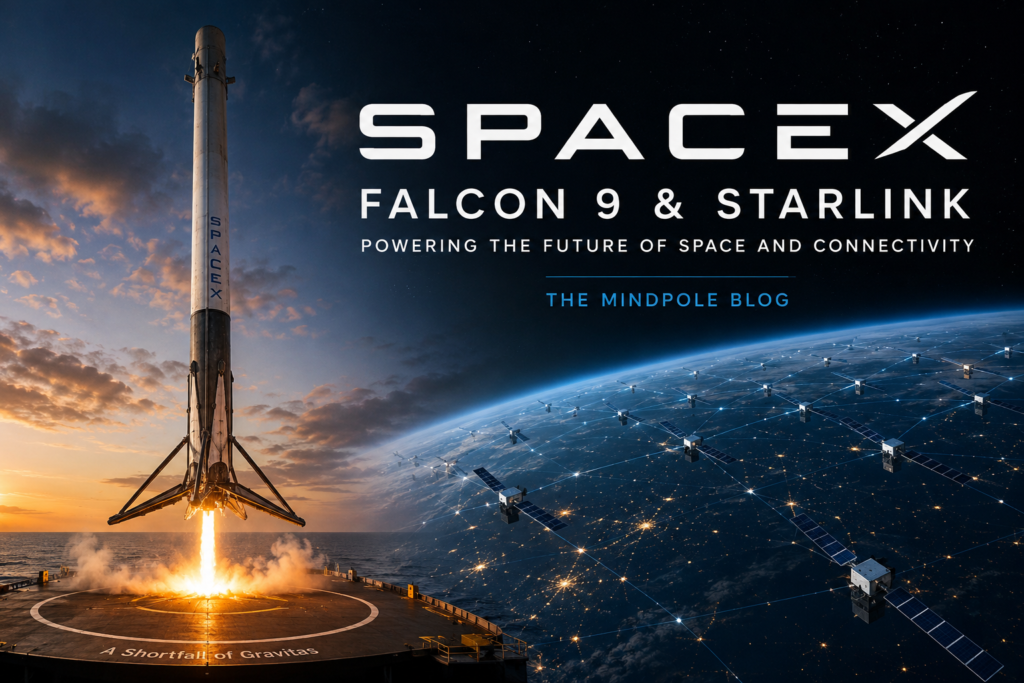
However, SpaceX’s Falcon 9 rocket changed that by doing something considered impossible for decades: landing and reusing the first stage of a rocket. Instead of discarding a $60 million booster in the ocean after one use, SpaceX flies it back and lands it upright — then uses it again. And again.
The result? Launch costs plummeted. Consequently, SpaceX now dominates the global launch market, handling more orbital launches than all other providers combined in many recent years. Today, it is the primary launch provider for NASA, the US Department of Defense, and hundreds of commercial satellites.
Starlink: The Quiet Engine Worth Trillions
While the rocket business grabbed headlines, the real money machine was quietly being built overhead — literally.
In 2019, SpaceX started launching Starlink satellites, building a constellation of thousands of small satellites in low Earth orbit to deliver high-speed internet anywhere on the planet. Since then, it has grown to provide internet services in around 160 countries and territories.
The numbers are staggering. Starlink ended 2025 with over 10 million subscribers and generated approximately $11.4 billion in revenue — making it 61% of SpaceX’s total business and its only currently profitable segment. Furthermore, analysts project 2026 Starlink revenues could reach between $15.9 billion and $24 billion.
Think about what that means in human terms. Starlink has connected fishing boats in the Pacific, disaster relief teams in earthquake zones, military units in active warzones, and remote villages in India and Africa that had never had reliable internet. In other words, it is genuinely changing lives while generating billions.
The xAI Chapter: Rockets Meet Artificial Intelligence
In February 2026, SpaceX merged with xAI, Elon Musk’s artificial intelligence company. The deal valued the combined entity at $1.25 trillion. Moreover, it brought together rockets, satellites, Grok (an AI chatbot), the social media platform X, and Colossus — one of the world’s largest AI supercomputers, housing 220,000 Nvidia GPUs.
The vision is sweeping: AI workloads processed in orbital data centers, powered by Starlink’s global connectivity network. As a result, SpaceX is no longer just a rocket company. Instead, it is positioning itself as the infrastructure layer for the AI-powered future — in space.
The merger also immediately secured massive commercial deals. In March 2026, SpaceX’s Colossus data center signed a contract with Anthropic worth $1.25 billion per month through 2029 — a deal worth approximately $40 billion over its life.
The IPO: Why Now, and Why It Matters
For 24 years, Elon Musk consistently resisted taking SpaceX public. His reasoning was straightforward: quarterly earnings pressure from Wall Street would conflict with the company’s long-term, decade-spanning mission. After all, going to Mars does not fit neatly into a three-month financial report.
So what changed?
Several things converged at once. Starlink hit profitability and scale. Starship — SpaceX’s next-generation mega-rocket — achieved reliable orbital flight in 2025 and holds NASA’s contract for the Artemis III Moon landing mission targeting 2027. In addition, the xAI merger consolidated Musk’s assets and created a company with a more complete story for public markets.
Consequently, SpaceX filed its S-1 registration publicly on May 20, 2026, and launched its investor roadshow on June 4 — pulled forward after a faster-than-expected SEC review. The company is targeting a Nasdaq debut on June 12, 2026, under the ticker SPCX, at an expected offer price of $135 per share and an implied valuation near $1.75 trillion.
To put that in perspective: the previous record for the largest IPO ever was Saudi Aramco’s $25.6 billion raise in 2019. SpaceX, however, is targeting between $40 billion and $75 billion — potentially three times that record.
When it lists, Elon Musk will become the first person to simultaneously lead two separate trillion-dollar publicly traded companies.
What the Numbers Actually Say
SpaceX’s financials are a fascinating mix of strength and ambition.
In 2024, the company was profitable with $791 million in net income. Then came the xAI merger. In 2025, SpaceX posted a GAAP net loss of $4.94 billion. In just the first quarter of 2026, the loss was $4.28 billion — a single quarter.
Alarming? Only on the surface. In fact, the losses are almost entirely driven by xAI’s AI infrastructure spending, which burned over $6 billion in 2025 alone. Strip that out, and the core launch and Starlink business is healthy and growing rapidly.
Meanwhile, the Starlink subscriber base more than doubled year-over-year: from 5 million in Q1 2025 to over 10.3 million in Q1 2026. SpaceX’s 2025 total revenue was approximately $15.5 billion. Notably, the company is not struggling — it is investing aggressively in the next frontier, by design.
What This Means for the World — and for You
The SpaceX IPO is not just a financial event. It is a cultural moment.
For the first time, ordinary investors around the world can own a piece of a company that is launching rockets to the Moon, connecting the unconnected through satellite internet, and building AI infrastructure in orbit. Moreover, SpaceX has announced plans to allocate up to 30% of IPO shares to retail investors — roughly three times the typical allocation — meaning individual investors, not just institutions, get meaningful access.
For Indian investors specifically, this raises important questions. Can Indian retail investors participate directly? Through which brokerages? What are the tax implications of holding foreign IPO shares? These are worth researching with a SEBI-registered financial advisor before acting.
The Bigger Picture: Inspiration as a Business Model
The most remarkable thing about SpaceX is not the valuation. It is that the company made believing in the impossible into a competitive advantage.
When Musk said he wanted to land rockets on drone ships in the ocean, engineers at legacy aerospace firms laughed. When he said he would build a rocket to take humans to Mars, governments questioned his sanity. Then came the moment that silenced every critic — he launched a Tesla Roadster into deep space on the first Falcon Heavy flight, just because he could. The world watched livestream footage of a car floating past Earth and felt something it had not felt in a long time.
Wonder.
Ultimately, the lesson for anyone building a business, or dreaming of one, is this: audacity compounds. The companies that change the world are rarely the ones that played it safe.
Key Facts at a Glance
| Detail | Info |
|---|---|
| Founded | 2002 |
| Founder | Elon Musk |
| IPO Date | June 12, 2026 (targeted) |
| Ticker | SPCX (Nasdaq) |
| IPO Price | $135 per share |
| Valuation | ~$1.75 trillion |
| 2025 Revenue | ~$15.5 billion |
| Starlink Subscribers | 10.3 million (Q1 2026) |
| Key Subsidiaries | Starlink, xAI, Grok, X |
| Retail Allocation | Up to 30% of IPO shares |
Final Thought
SpaceX’s IPO is the closing of a remarkable first chapter and the opening of an even more ambitious second one. A company born from one man’s obsession with making life multi-planetary is now poised to become one of the most valuable public enterprises in human history.
Whether you invest or simply watch, this is the kind of business story that reminds us what is possible when vision meets relentless execution.
At The Mind Pole, we believe the most inspiring stories are not in history books — they are happening right now. This is one of them.