Category: Businesses That Are Changing the World | The Mind Pole
In 1993, three engineers met at a Denny’s diner in San Jose, California. They had $600 between them — literally scraped together from their pockets — and an idea to build graphics chips for video games.
Today, that company is worth over $3 trillion. The demand for Nvidia AI chips exploded. Its Nvidia AI chips power ChatGPT, SpaceX’s AI supercomputer, every major cloud provider on the planet, and the most ambitious artificial intelligence projects in human history. Its founder, Jensen Huang, is worth over $200 billion — making him one of the wealthiest people alive.
None of it was inevitable. And almost none of it happened the way anyone planned.
A Childhood That Built a Leader
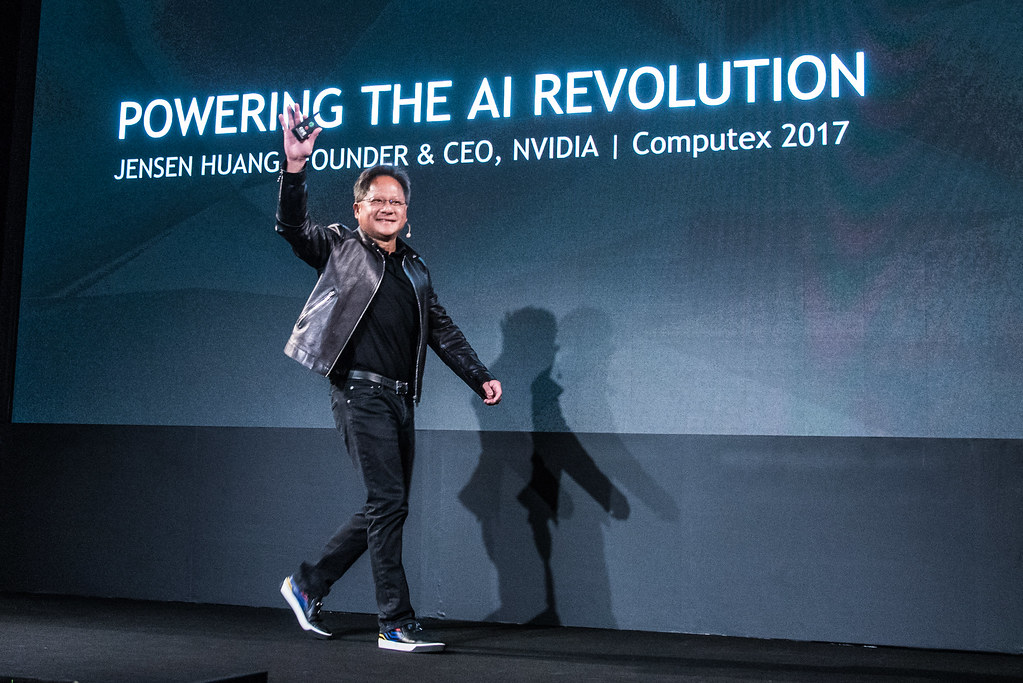
Before Nvidia, before the GPUs, before the leather jacket that became Silicon Valley’s most iconic wardrobe choice, there was a nine-year-old boy cleaning toilets at a reform school in rural Kentucky.
Jensen Huang was born in 1963 in Tainan, Taiwan. His family moved to Thailand when he was five. When he was nine, his parents — wanting to give their sons a better future — sent Jensen and his brother to live with an uncle in Tacoma, Washington. The uncle, believing he was doing the right thing, enrolled them at the Oneida Baptist Institute in Kentucky — a school he thought was prestigious.
It was, in fact, a reform academy for troubled youth.
For years, Huang was bullied relentlessly. He was called ethnic slurs, threatened with knives, and his daily chore was scrubbing dormitory toilets. He was ten years old. Despite all of this, he did not break. Instead, he competed in table tennis, eventually placing third at the US Open Junior Championships at age fifteen. He graduated high school at sixteen. Earned a degree in electrical engineering from Oregon State University, where he met his future wife Lori in a lab class. He then earned a master’s degree from Stanford.
Later in life, Huang would credit those early years — the reform school, the bullying, the toilet-cleaning — as formative. As a result, he developed what he describes as an unusual response to pressure: his heart rate drops, and he performs at his absolute best when the stakes are highest. That trait, forged in hardship, would prove critical more than once in Nvidia’s story.
A Denny’s Booth and $600 in Startup Capital
In April 1993, Huang met with two colleagues — Chris Malachowsky from Sun Microsystems and Curtis Priem from IBM — over cheap coffee at a Denny’s. The three of them, inspired by the potential of 3D graphics for gaming, decided to start a company.
To formally incorporate, Huang found a lawyer who asked for $200 upfront. Huang had exactly $200 in his pocket. He went back to Malachowsky and Priem and asked each of them for another $200. Total founding capital: $600. The company was almost named NVision — until they discovered a toilet paper manufacturer had already claimed it. They settled on Nvidia instead.
Shortly after, Sequoia Capital’s Don Valentine invested — not because he was blown away by the pitch, which reportedly did not go well, but because a mutual contact vouched for them. That early vote of confidence gave Nvidia the runway to build its first chip.
The early years were brutal. Nvidia’s first product, the NV1 chip, was built around a quadratic rendering approach that turned out to be incompatible with the direction the industry was heading. Microsoft’s Direct3D standard went in a completely different direction, and Nvidia’s chip was suddenly obsolete before it had a chance to succeed.
Furthermore, they had a second chip — the NV2 — under development with Sega. That too was cancelled. By 1996, Nvidia was nearly bankrupt, down to its last four months of cash, with most of its competitors laughing at its prospects.
Then came the NV3.
The Chip That Saved Everything
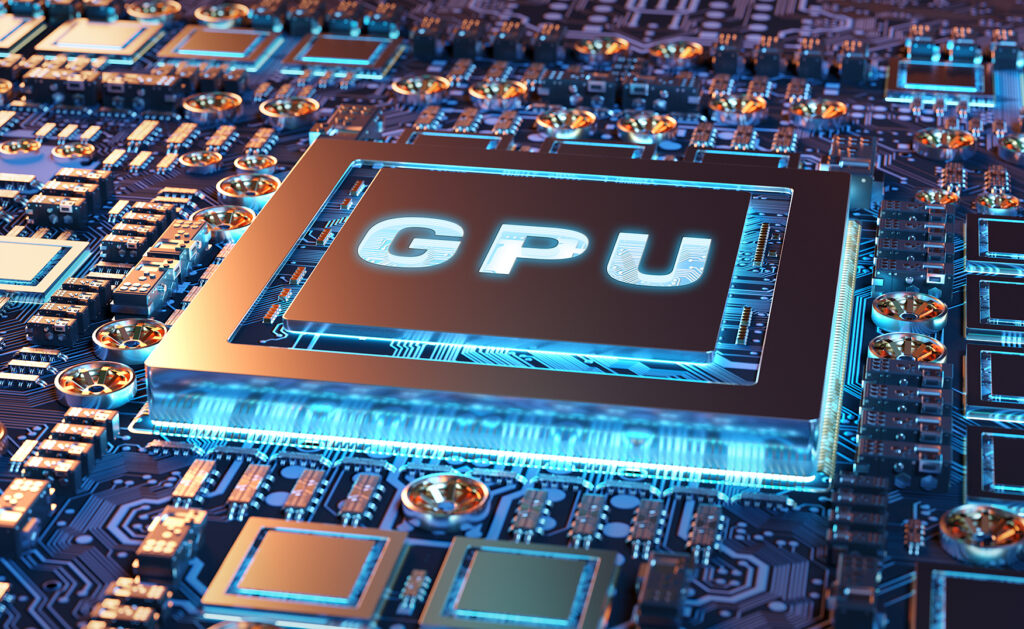
In 1997, Nvidia launched the RIVA 128 — built on a completely new architecture, developed in eighteen months under enormous financial pressure. It sold one million units in four months and pulled the company back from the edge.
Two years later, in 1999, Nvidia invented something that would change computing forever: the GPU — the Graphics Processing Unit. With the launch of the GeForce 256, Nvidia gave the world a chip that could handle the complex mathematics of 3D graphics far faster than a traditional CPU. Gaming was transformed overnight. The company went public the same year.
When the stock first hit $100 per share, Huang got the Nvidia logo tattooed on his left shoulder. It is still there.
However, what Huang understood — and what most of the world would not grasp for another two decades — was that a GPU is not just a graphics chip. It is a parallel computing engine: a processor capable of running thousands of small calculations simultaneously, rather than a few large ones sequentially. That architectural difference, which made it perfect for rendering game graphics, also made it perfect for something else entirely: training artificial intelligence.
The Nvidia AI Chip That Nobody Saw Coming
In 2006, Nvidia launched CUDA — Compute Unified Device Architecture — a software platform that allowed developers to use Nvidia GPUs for general-purpose computing beyond graphics. At the time, almost nobody outside a small community of academic researchers paid attention.
That small community, however, included the pioneers of deep learning. In 2012, a research paper called AlexNet demonstrated that training a neural network on Nvidia GPUs could achieve image recognition results that shattered every previous benchmark. The deep learning revolution had a launch date — and Nvidia’s GPU was the engine.
Over the following decade, Nvidia quietly became indispensable to every major AI research lab in the world. Google, Meta, OpenAI, DeepMind — all of them trained their models on Nvidia hardware. Moreover, the CUDA software platform created a moat that competitors have spent billions trying to cross without success: once a research team builds its workflows around CUDA, switching costs are enormous.
In other words, Nvidia had spent thirteen years building the infrastructure of the AI revolution before most people knew an AI revolution was coming.
The Moment Everything Exploded
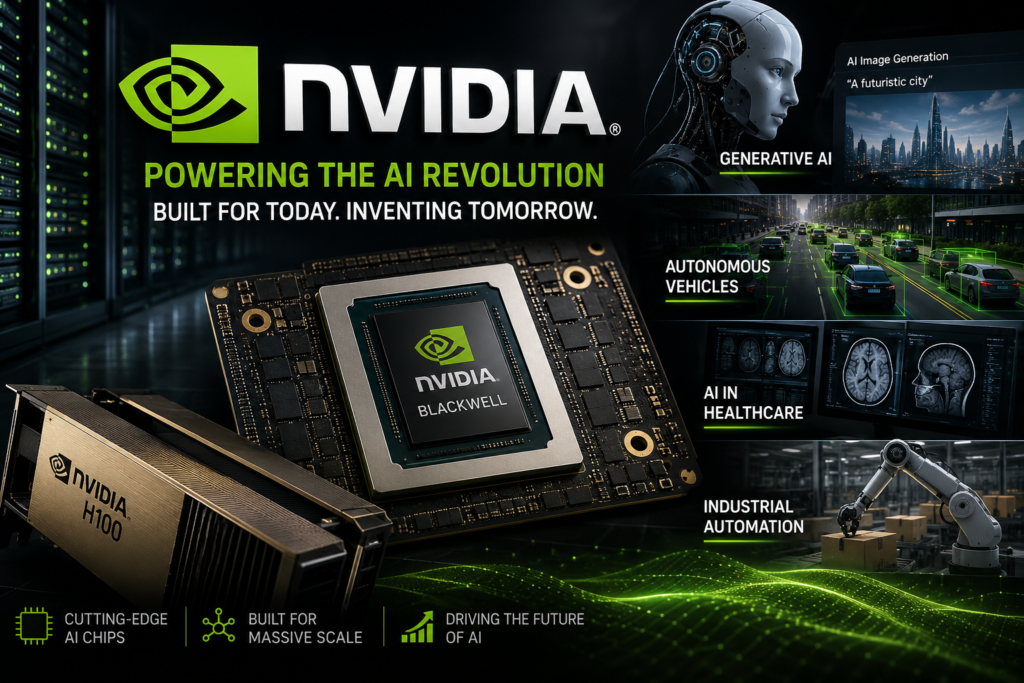
In November 2022, OpenAI launched ChatGPT. The world discovered generative AI. And every company on the planet suddenly realised they needed the one thing Nvidia made. The Nvidia AI Chips.
The numbers that followed are almost beyond comprehension. Nvidia’s revenue in fiscal year 2023 was $26.9 billion. By fiscal year 2025, it had reached $130.5 billion — a nearly fivefold increase in two years. In Q1 of fiscal year 2027, reported in May 2026, Nvidia posted a single-quarter revenue of $81.6 billion — up 85% year-on-year — with data centre revenue alone reaching $75.2 billion, up 92%.
To put that in perspective: Nvidia’s data centre revenue in a single quarter now exceeds what Intel’s entire PC chip division generates in a full year.
Consequently, Nvidia’s stock price rose more than 800% between early 2023 and 2024 alone. Jensen Huang, who had held his stake patiently for over thirty years, became one of the world’s wealthiest people — not through a sale or a liquidity event, but simply by not selling.
Furthermore, Nvidia returned $41.1 billion to shareholders in fiscal year 2026 alone through buybacks and dividends. It authorised an additional $80 billion buyback in May 2026. These are not the numbers of a company riding a temporary wave — they are the numbers of a business that has become structural infrastructure for the global economy.
What Nvidia Actually Sells
It is worth understanding what makes Nvidia’s dominance so difficult to challenge.
Nvidia does not just sell chips. It sells a complete computing platform — hardware, software, networking, and developer tools — that has been refined over three decades. The CUDA software ecosystem alone has over four million developers. Its latest Blackwell architecture chips deliver AI inference at a fraction of the cost of previous generations. Its NVLink interconnect technology allows thousands of chips to work together as a single unified system — what Huang calls “AI factories.”
In fact, the company’s guidance for Q2 fiscal year 2027 calls for revenue of $91 billion — in a single quarter. That would make Nvidia’s quarterly revenue larger than the annual revenue of most Fortune 500 companies. The demand for the Nvidia AI chip drove revenue from $26.9 billion in FY2023 to $130.5 billion by FY2025
Nvidia has also secured heavyweight partnerships with every major cloud provider — AWS, Google Cloud, Microsoft Azure, Oracle Cloud — as well as companies including Anthropic, Meta, xAI, and the US Department of Energy. As the SpaceX article on this site noted, the Colossus AI supercomputer powering xAI runs on 220,000 Nvidia GPUs. The hardware behind the AI revolution has a name, and it is Nvidia.
The Next Frontier: From Data Centres to Your Laptop
However, Nvidia is not content with dominating data centres. At the Computex conference in Taiwan in June 2026, Jensen Huang announced that Nvidia — alongside Microsoft — intends to reinvent the personal computer.
The company unveiled the RTX Spark, a new system-on-chip for laptops built on the ARM architecture — the same power-efficient design that transformed mobile devices and Apple’s MacBooks. The ambition is clear: bring the AI capabilities of a data centre to the device in your bag. Shares of Intel, AMD, and Qualcomm dropped on the news. That reaction told you everything you needed to know about how seriously the industry takes Nvidia’s ability to execute on bold promises.
The Honest Picture: Risks Worth Knowing
No story this good comes without complexity, and an honest account of Nvidia requires acknowledging the risks.
First, the export control challenge. In early 2025, the US government imposed restrictions on the export of certain Nvidia chips — including the H20 — to China and other markets. As a result, Nvidia was unable to ship $2.5 billion of H20 revenue in Q1 fiscal year 2026 and took a $4.5 billion inventory charge. China had been a significant market, and navigating geopolitical constraints will continue to weigh on the business.
Second, the customer concentration risk. Nvidia’s biggest customers — Microsoft, Google, Amazon, Meta — are also developing their own custom AI chips. While none has yet threatened Nvidia’s performance advantage, the long-term risk of hyperscalers reducing their dependence on external silicon is real and worth watching.
Third, the valuation question. At a $3 trillion market capitalisation, Nvidia is priced for extraordinary continued growth. The company is delivering on that expectation today — but any slowdown in AI infrastructure spending could be felt sharply.
That said, Huang himself has described the current moment as the beginning, not the peak, of the AI infrastructure buildout — calling it “the largest infrastructure expansion in human history.” The Q2 FY2027 revenue guidance of $91 billion suggests his customers agree.
The Lesson of Thirty Years in a Leather Jacket
Jensen Huang has been Nvidia’s CEO for over thirty years — a tenure described by the Wall Street Journal as “almost unheard of in fast-moving Silicon Valley.” He has navigated near-bankruptcy, product failures, industry pivots, a global pandemic, geopolitical headwinds, and the most explosive demand surge in semiconductor history — all without losing the thread.
When asked about Nvidia’s improbable journey, Huang has been consistent: if the three founders had known in 1993 how hard it would be, they probably would not have started. “Building Nvidia turned out to have been a million times harder than we expected,” he has said. “The pain and suffering involved was extraordinary.”
Ultimately, that is the most honest thing a founder can say. And it is perhaps the most useful thing any aspiring entrepreneur can hear.
The overnight success took thirty years. The AI revolution was built on a gaming chip. And the world’s most important technology company was founded with $600 at a Denny’s.
If that does not inspire you, nothing will.
Key Facts at a Glance
| Detail | Info |
|---|---|
| Founded | April 1993, San Jose, California |
| Founders | Jensen Huang, Chris Malachowsky, Curtis Priem |
| Founding Capital | $600 (from their pockets) |
| IPO | 1999 (Nasdaq: NVDA) |
| FY2025 Revenue | $130.5 billion |
| FY2026 Revenue | $215.9 billion (↑65% YoY) |
| Q1 FY2027 Revenue | $81.6 billion (↑85% YoY) |
| Q2 FY2027 Guidance | $91 billion |
| Market Cap | ~$3 trillion |
| Jensen’s Net Worth | $200 billion+ |
| FY2026 Shareholder Returns | $41.1 billion |
| Key Customers | AWS, Google, Microsoft, Meta, xAI, Anthropic |
| Jensen’s Tenure | 30+ years as CEO |
Final Thought
SpaceX showed us that rockets can be reused. Klarna showed us that an 85% crash is not the end. Zepto showed us that age is not a prerequisite for audacity. Figma showed us that being blocked can redirect you somewhere better.
And Nvidia shows us something different — perhaps the most important lesson of all: that the biggest opportunities are often invisible for a very long time. The GPU sat dormant as an AI engine for over a decade before the world was ready for it. Huang never stopped believing. He just kept building.
Thirty years. One diner booth. Three hundred billion dollars in annual revenue.
That is what patience, compounded by vision, looks like.
At The Mind Pole, we believe the most important stories are not about luck. They are about the people who kept building long after everyone else stopped watching.