
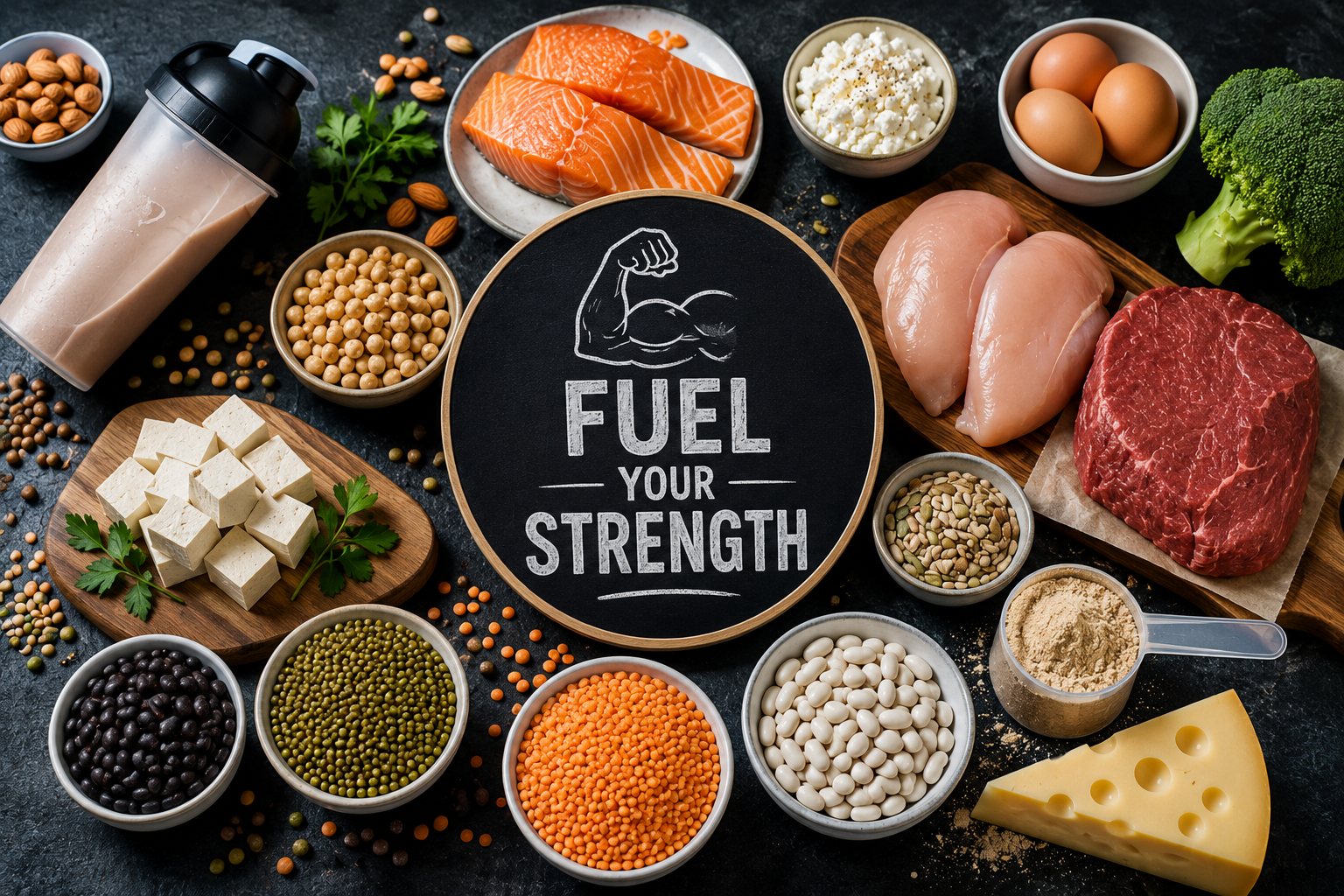
Nutrition Science · 9 min read
Beyond gym culture and protein trend, here’s what the science actually says about this essential macronutrient — and why your body obsesses over it.
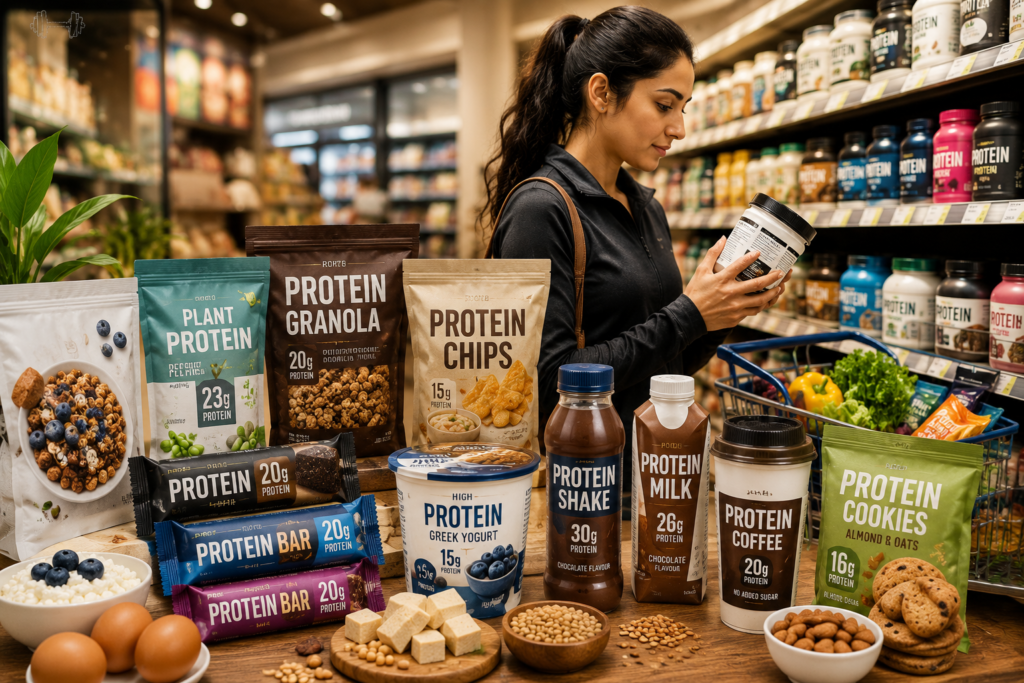
Walk into a supermarket today and you’ll notice something interesting.
Protein cereal.
Protein yogurt.
Protein coffee.
Protein chips.
Protein cookies.
Even foods that were never associated with fitness now proudly display “High Protein” labels on their packaging. It feels as if the entire food industry woke up one morning and collectively decided that protein trend was the answer to everything.
But how did we get here? And more importantly, is this growing obsession with protein actually helping us become healthier, or is it simply the latest marketing trend?
Ask most people what protein does and they’ll say something about muscle. They’re not wrong — but that answer barely scratches the surface. Proteins are the molecular workhorses of the body. Every enzyme that breaks down your food, every antibody that fights infection, every hormone that regulates your mood: all proteins.
Protein: the molecule behind every meal, muscle, and metabolic signal

Understanding this molecule means understanding life itself.
Amino acids used to build human proteins
20
Essential amino acids your body can’t synthesise
9
Kilocalories per gram of protein
~4
What proteins actually are
At their core, proteins are long chains of amino acids — small organic molecules linked together in precise sequences. That sequence, encoded in your DNA, determines how the chain folds into a three-dimensional structure, and that structure determines function. A slight change in the sequence can mean the difference between a healthy enzyme and a non-functional one.
“The sequence of amino acids is not merely chemistry — it is information, instruction, and identity all at once.”
The human body uses 20 different amino acids. Of these, nine are classified as essential: your body cannot synthesize them in meaningful quantities, so they must come from food. The remaining eleven are non-essential — not because they’re unimportant, but because your body can manufacture them from other molecules.
The essential nine
Each essential amino acid plays a distinct role in physiology. Here’s a quick overview:
Leucine
Primary trigger for muscle protein synthesis via mTOR signalling
Tryptophan
Precursor to serotonin and melatonin — mood and sleep regulation
Lysine
Essential for collagen formation and calcium absorption
Methionine
Supports detoxification and is a sulphur donor for antioxidants
Isoleucine
Involved in energy regulation and immune function
Valine
Works with leucine and isoleucine (BCAAs) in muscle metabolism
Histidine
Precursor to histamine; important in nerve signal transmission
Threonine
Supports gut lining integrity and immune antibody production
Phenylalanine
Precursor to dopamine, norepinephrine, and thyroid hormones
How much do you actually need?
The minimum recommendation from health authorities is 0.8g of protein per kilogram of body weight per day — but researchers now consider this a floor, not a target. For sedentary adults, emerging evidence suggests 1.2–1.6g/kg is closer to optimal for maintaining lean mass and satiety, especially as we age. Knowing what to eat is only half the battle — staying disciplined with your fitness routine is where most people struggle.
Protein has a notably high thermic effect: your body burns roughly 20–30% of its calories just processing it, compared to 5–10% for carbohydrates and 0–3% for fat. This is one reason higher-protein diets tend to support energy balance — not through any metabolic magic, but through thermodynamics.
Protein Quality: Not All Sources Are Equal
Of course, getting enough protein is only part of the story. Protein quality matters too.
Scientists assess protein quality using tools such as PDCAAS (Protein Digestibility-Corrected Amino Acid Score) and the newer DIAAS (Digestible Indispensable Amino Acid Score). These methods help evaluate not just how much protein a food contains, but also how well the body can digest it and whether it provides all the essential amino acids in adequate amounts.
In general, animal-based foods — such as eggs, dairy, meat, and fish — tend to score highest on these measures. That is because they naturally contain all nine essential amino acids in proportions that closely match human needs. As a result, they are often referred to as complete protein sources.
By contrast, many plant-based foods are lower in one or more essential amino acids. However, that does not make them inferior or inadequate. In fact, with a little variety and planning, plant-based diets can easily meet protein needs. Foods such as rice and legumes, for example, complement each other well and can provide a more complete amino acid profile across the course of a day.
Importantly, this does not mean you need to obsess over combining foods at every single meal. What matters far more is the overall quality and diversity of your diet across the day.
The good news for plant-based eaters is that some foods — including soy, quinoa, buckwheat, and hemp seeds — are already considered complete protein sources and perform well on quality indices. So while not all protein sources are equal on paper, a balanced diet can still deliver everything the body needs in practice.
Beyond Muscle: Protein’s Overlooked Roles
Protein’s importance extends far beyond muscle building. In fact, it plays a central role in nearly every major system of the body. For instance, structural proteins such as collagen and keratin provide the scaffolding for skin, bones, and hair. Meanwhile, transport proteins like haemoglobin carry oxygen through the bloodstream, ensuring tissues receive the fuel they need to function.
At the same time, regulatory proteins — including insulin and growth hormone — help coordinate metabolism and maintain internal balance. Receptor proteins, in turn, receive and transmit signals on cell surfaces, allowing cells to respond to their environment. Then there are defensive proteins, most notably antibodies, which help the immune system recognise and neutralise harmful pathogens.
Taken together, these roles make one thing clear: without protein, none of these systems can function properly.
This is precisely why chronic protein deficiency — most visibly seen in cases of severe malnutrition — can trigger a cascade of health problems. Over time, the body begins to break down, leading to compromised immunity, poor wound healing, muscle wasting, and oedema.
So while protein is often discussed in the context of fitness and body composition, its real significance runs much deeper. Adequate protein intake is not merely about looking leaner or building muscle — it is foundational to physiological integrity, recovery, resilience, and overall health.
The Business of Protein
Whenever consumer attention shifts, businesses follow. Food companies quickly realized that adding a “High Protein” label could make a product appear healthier, even if little else changed.
A cookie is still a cookie. A protein cookie simply sounds more responsible. This doesn’t mean protein-enhanced foods are bad.
It means consumers should understand that protein trend has also become a powerful marketing tool. The word itself now carries a health halo. And brands know it.
Is India Facing a Protein Gap?
The protein trend conversation has become particularly important in India. Many Indians consume adequate calories but may not always consume enough quality protein. Traditional diets often rely heavily on cereals and carbohydrates, while protein-rich foods can be consumed in smaller quantities than recommended.
As awareness grows, more people are actively trying to include foods such as:
- Lentils and legumes
- Paneer
- Milk and yogurt
- Soy products
- Eggs
- Fish and chicken
- Nuts and seeds
This shift reflects a broader understanding that nutrition isn’t just about eating enough. It’s about eating the right balance of nutrients.
Top food sources with protein content
Protein values below are approximate per 100g of food and sorted by protein density. Complete protein sources supply all nine essential amino acids in adequate amounts, while incomplete sources may be low in one or more.
| Food | Per 100g | Density | Complete? |
|---|
The Bigger Picture
The rise of the protein trend tells us something fascinating about modern society. More than ever, people are paying closer attention to what they eat. They are reading labels, asking better questions, and becoming active participants in their own health rather than passive consumers.
At the same time, this shift reflects a broader truth about how modern habits are formed. In many ways, the same way we overconsume social media, breaking unhealthy food habits also requires rewiring the brain’s reward system. In other words, better nutrition is not just about information — it is also about behaviour, routine, and consistency.
That, in itself, is a positive development.
So, whether protein remains the dominant nutrition trend or eventually gives way to the next health craze, one thing is clear: it has successfully pushed nutrition into everyday conversation. And perhaps that conversation matters more than the trend itself.
After all, the real victory isn’t simply that people are consuming more protein. It’s that they’re finally paying attention to what’s on their plate.
This article is for informational purposes only and should not be considered medical or dietary advice. For personalised guidance, consult a registered dietitian or qualified healthcare professional.