
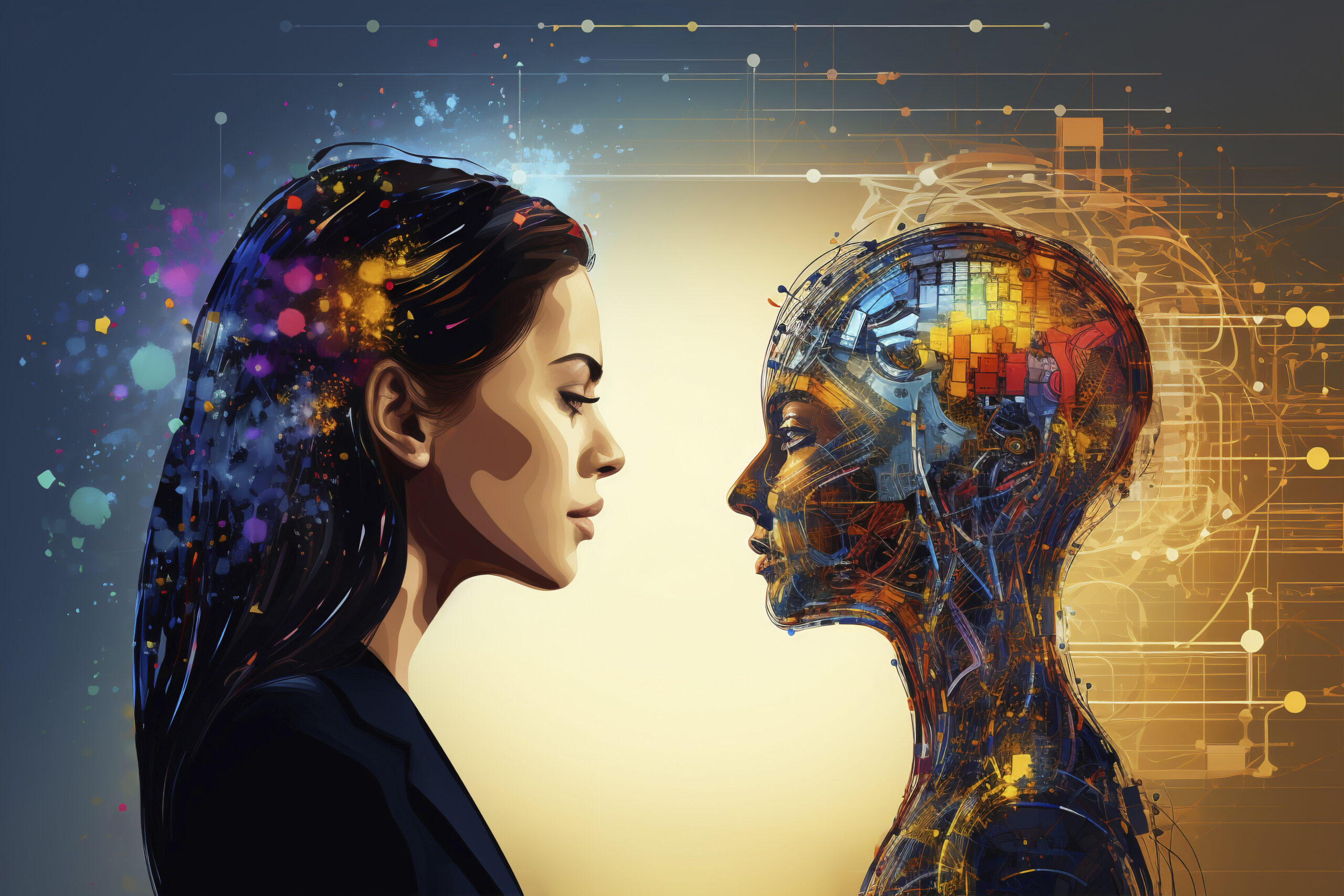
How AI is Changing the Way Humans Think
AI changing human thinking is no longer a future concern — in 2026, it is already happening quietly, across every part of daily life.
In fact, artificial intelligence today shapes almost everything modern life touches. From the videos people watch and the products they buy to the way they study, work, communicate, and consume information, AI has become deeply woven into human behaviour. Moreover, most people interact with artificial intelligence dozens of times a day without even realising it.
The interesting part is not just how AI works. The bigger question is: how is AI changing the human mind itself?
The answer is more important than most people realise. Specifically, AI is already reshaping attention spans, learning habits, decision-making, creativity, productivity, emotional behaviour, and the ability to focus — sometimes for the better, and sometimes in ways that quietly work against us.
Furthermore, these changes do not happen in isolation
This is deeply connected to how platforms exploit dopamine loops to keep us engaged longer than we intend – a pattern that shapes behaviour before most people notice it is happening.
AI is Already Everywhere
Artificial intelligence is no longer limited to tech companies or advanced software. It is part of everyday life.
For example: Netflix decides what to watch next, Instagram curates what appears first, and Spotify builds playlists based on listening patterns — all powered by AI systems learning human behaviour in real time.
Companies like Meta are now monetising directly what AI helped them build — your attention, now sold back to you. These systems are designed to learn human behavior. The more people interact with them, the smarter they become.
Over time, AI learns:
- what captures attention
- what keeps people scrolling
- what triggers emotional reactions
- what increases engagement
That constant optimization is slowly changing human thinking patterns.
How AI Changing Human Thinking Is Affecting Deep Focus
One of the biggest changes people notice today is the decline of deep focus. Modern digital platforms are designed for speed.
Everything is instant:
- quick videos
- short captions
- fast answers
- endless scrolling
- bite-sized content
As a result, many people now consume huge amounts of information without spending enough time reflecting on it.
For example, someone may watch 50 short videos in an hour but struggle to read a 10-page article without checking their phone. This doesn’t mean humans are becoming less intelligent. It means the brain is adapting to a fast-paced digital environment. The human brain changes according to repeated behaviour.
When people constantly consume quick stimulation, the brain gradually becomes less comfortable with slow and focused thinking. That is one reason many people today struggle with:
- concentration
- patience
- long-form reading
- boredom
- deep work
AI and the Attention Economy
In today’s world, attention has become one of the most valuable resources on earth — and companies compete aggressively to capture it. In fact, AI algorithms are specifically trained not just to maximise engagement, but to make disengagement feel almost impossible.
To do this, social media platforms continuously study how long people watch videos, what content triggers emotional reactions, what keeps users scrolling, and which moments are most likely to pull someone back in. Moreover, the more data these systems collect, the more precisely they can predict — and manipulate — human behaviour in real time.
That is why people often open an app for “just two minutes” and suddenly lose an hour. AI systems are extraordinarily good at finding the exact stimulus a person’s brain responds to. As a result, the experience of being online has shifted from conscious browsing to something far more automatic and compulsive.
Consequently, overstimulation has become one of the defining mental health challenges of the digital age. Over time, constant algorithmic stimulation leads to mental fatigue, shorter attention spans, difficulty focusing, increased distraction, and a gradual erosion of mindfulness — often so slowly that people do not notice until the damage is already done.
Furthermore, many people now feel mentally exhausted even after spending hours online doing very little meaningful work. The effort was not physical. Instead, it was the invisible cognitive cost of processing an endless, algorithmically optimised stream of content designed specifically to keep the brain engaged without ever letting it rest.
AI is Changing the Way People Learn
Learning has become faster than ever.
Students can now:
- summarize chapters instantly
- generate notes using AI tools
- ask questions anytime
- translate information immediately
- access personalized learning systems
This creates enormous advantages.
AI makes education:
- more accessible
- more efficient
- more personalized
- easier to navigate
But there’s another side to it.
When information becomes too easy to access, people may rely less on critical thinking. For example, many students now search for instant answers instead of spending time solving problems independently. Why struggle through learning when AI can generate a solution within seconds? Convenience is powerful. But overdependence can weaken independent thinking.
The challenge is learning how to use AI as a tool without letting it replace human curiosity and effort.
AI and Human Creativity
Artificial intelligence is also fundamentally changing the nature of human creativity — and the implications run deeper than most people initially realise.
Today, AI can generate articles, music, images, video edits, designs, captions, and ideas within seconds. For creators, that capability is genuinely powerful. In fact, AI helps people brainstorm faster, overcome creative blocks, improve productivity, and save significant time on repetitive tasks that once consumed hours of focused effort. Moreover, it has lowered the barrier to creation dramatically — giving people with limited technical skills the ability to produce work that would previously have required years of training.
However, creativity is not only about speed or output volume. Some of the best human ideas have always emerged from the very experiences that modern technology tends to eliminate — boredom, quiet observation, silence, struggle, deep thinking, and the kind of real-life friction that forces the mind to find unexpected solutions. Furthermore, those slow, uncomfortable moments are often precisely where genuine originality is born.
As a result, if humans rely too heavily on AI-generated ideas, originality may slowly decline without anyone noticing the loss. The danger is not that AI creates — it is that people may gradually stop trusting their own creative instincts when a faster, easier alternative is always available.
Ultimately, the future of creativity will likely depend on balance. In other words, the people who stand out most will not be those who use AI the most, nor those who refuse it entirely. Instead, they will be the ones who combine human emotion, lived experience, storytelling, and imagination with AI tools — using technology to amplify their voice rather than replace it.
AI is Influencing Human Decisions
Many people believe they make fully independent choices online. In reality, algorithms influence digital behaviour constantly.
AI affects:
- what news people read
- what products they buy
- what content becomes popular
- what opinions appear repeatedly
- what trends dominate social media
For example, if someone watches a few videos about productivity, the algorithm may continue showing similar content for weeks. Over time, people can become trapped in “algorithm bubbles” where they mostly see ideas similar to their existing interests and beliefs.
This affects perspective and decision-making more than most people realize.
The Emotional Impact of AI and Constant Stimulation
Modern digital life is emotionally exhausting for many people. AI-powered platforms often prioritize emotionally intense content because strong emotions increase engagement.
That means users constantly consume:
- comparisons
- outrage
- trends
- pressure
- unrealistic lifestyles
- endless opinions
As a result, many people experience:
- anxiety
- overstimulation
- emotional fatigue
- reduced peace of mind
- constant distraction
The human mind was not designed to process endless streams of information every waking hour.
That’s why many people now crave:
- silence
- mindfulness
- nature
- digital detoxes
- slower living
- deeper focus
Ironically, as technology becomes smarter, people are starting to value calmness more.
The Real Skill of the Future: Focus
In the AI era, focus may become one of the rarest and most valuable skills a person can possess — more sought after, in many ways, than technical knowledge or creative output alone.
In fact, people who can think deeply, concentrate for long periods, avoid constant distraction, manage technology intentionally, and stay emotionally balanced are already beginning to stand out in ways that algorithms simply cannot replicate. Moreover, as AI continues automating faster thinking, it is the slower, more deliberate kind of thinking that becomes genuinely scarce — and consequently, genuinely powerful.
Furthermore, the world is not slowing down. It is becoming louder, faster, and more distracting with every passing year. As a result, the ability to protect attention is no longer just a productivity habit — it is becoming a form of personal power that separates people who consume the digital world from those who consciously direct it.
Ultimately, in a future where AI handles speed, the humans who master depth will have the greatest advantage of all.
How to Use AI Without Losing Yourself
AI itself is not the enemy. It is simply a tool — and like every tool in human history, its value depends entirely on the awareness of the person using it. The real challenge, therefore, is learning to use technology consciously instead of becoming quietly controlled by it.
Used well, AI can help people learn faster, work more efficiently, generate ideas, automate repetitive tasks, and organise information in ways that would have seemed extraordinary just a decade ago. However, no matter how capable AI becomes, independent thinking, creativity, reflection, and emotional connection cannot be automated — and moreover, they should not be. These are not inefficiencies to optimise away. Instead, they are what make human contribution meaningful.
As a result, the goal is not to resist AI but to remain conscious while using it. Here are four practical ways to stay mentally sharp in the AI age:
1. Spend Time Away From Screens
Even short, intentional breaks from constant stimulation can significantly improve clarity and focus.
2. Read Long-Form Content
Books and detailed articles rebuild concentration and patience — two qualities algorithmic content actively erodes.
3. Practice Deep Work
Spend dedicated time on one task without distractions. Consequently, the brain relearns what sustained focus feels like.
4. Use AI as Assistance, Not Replacement
Let AI support your thinking. However, never outsource the thinking itself — that distinction matters more than most people realise.
Final Thoughts
Artificial intelligence is changing human thinking faster than most people expected. It is reshaping attention, learning, creativity, productivity, and daily behaviour. Some of these changes are positive. Others require awareness and balance.
The future will likely belong to people who can combine technology with conscious thinking. Because in a world filled with algorithms competing for attention, the ability to think independently may become more valuable than ever.
AI will continue evolving. The real question is whether humans will continue evolving thoughtfully alongside it.
Frequently Asked Questions (FAQs)
How is AI changing human behavior?
In 2026, AI is quietly reshaping attention spans, learning habits, decision-making, creativity, and emotional behaviour — often without people realising it is happening at all.
Is AI reducing attention spans?
Constant digital stimulation and AI-powered content feeds may contribute to shorter attention spans and reduced focus.
Can AI affect creativity?
AI can improve creativity through idea generation and productivity, but overdependence may reduce original thinking.
What skills will matter most in the AI future?
Focus, emotional intelligence, critical thinking, adaptability, and creativity may become increasingly valuable.
Is AI good or bad for society?
AI offers many benefits, including efficiency and accessibility, but it also creates challenges related to distraction, overstimulation, and digital dependence.