What a small-town Norwegian kid teaches us about obsession, identity, and the power of refusing to accept limits
In Bryne, Norway — a farming town of 13,000 people best known for its dairy industry — there is a mural on the side of an old dairy building. It shows a young man in a football jersey. Visitors pay 750 Norwegian kroner to go on the “Haaland Safari” — a guided tour of the murals, the local stadium where he first kicked a ball, and the fields where a quiet, obsessive boy spent every spare hour practising one thing: scoring goals.
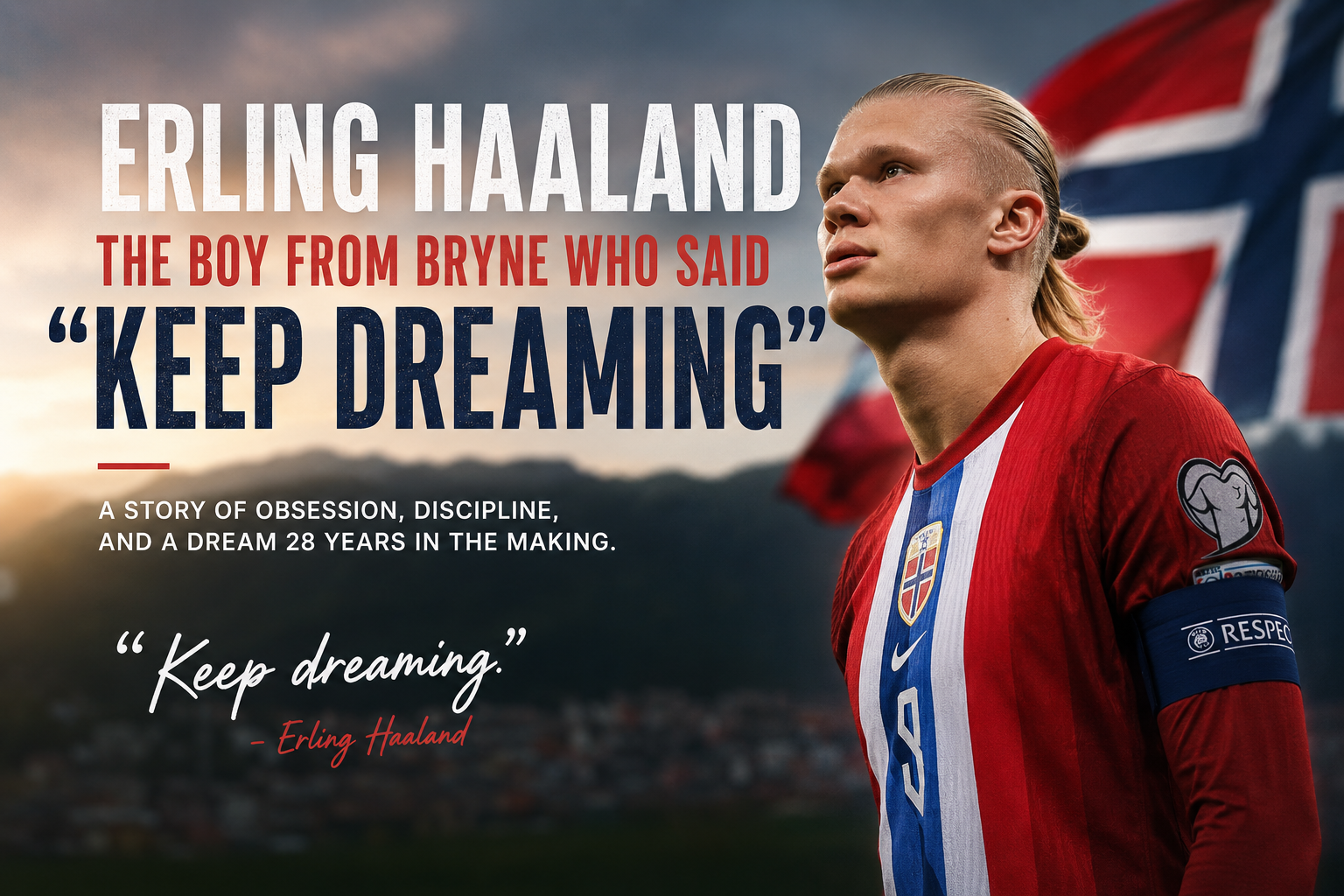
That boy is now one of the most feared strikers in the history of football. His name is Erling Haaland. And his story is not about talent. It is about what happens when a person decides — completely, stubbornly, relentlessly — to become the best in the world at one thing.
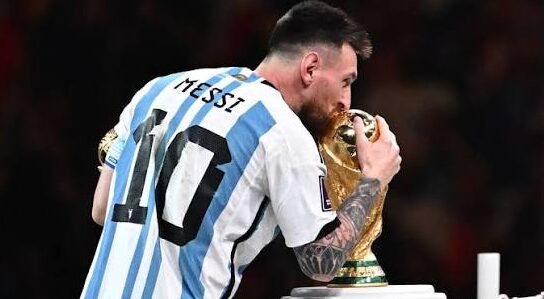
Much like the comeback story we explored in Messi’s record-breaking World Cup journey, some stories in football go beyond sport. Haaland’s is one of them.
Born into football, but nothing was handed to him
Erling Braut Haaland was born on 21 July 2000 in Leeds, England, at a time when his father, Alf-Inge Haaland, was playing for Leeds United. Football was in his DNA — his father represented Norway at the 1994 World Cup. His mother, Gry Marita Braut, is one of Norway’s greatest heptathletes, having won multiple national titles throughout the 1980s and 1990s.
But genetics only open a door. What Haaland did next was walk through it with an obsession few people in any field ever match. He returned to Bryne, grew up in that small farming community, and started at the local club — Bryne FK — where fans would arrive to watch games on tractors. No glamour. No spotlight. Just football.
He was not a prodigy in the conventional sense. As a teenager he was tall but uncoordinated. Reports from his early career note that he genuinely struggled to run properly. He worked on it. Relentlessly. He fixed his stride, built his body, and refined a finishing instinct that coaches would later describe as something close to supernatural.
Records that no one saw coming
The numbers Haaland has produced in professional football are almost difficult to process.
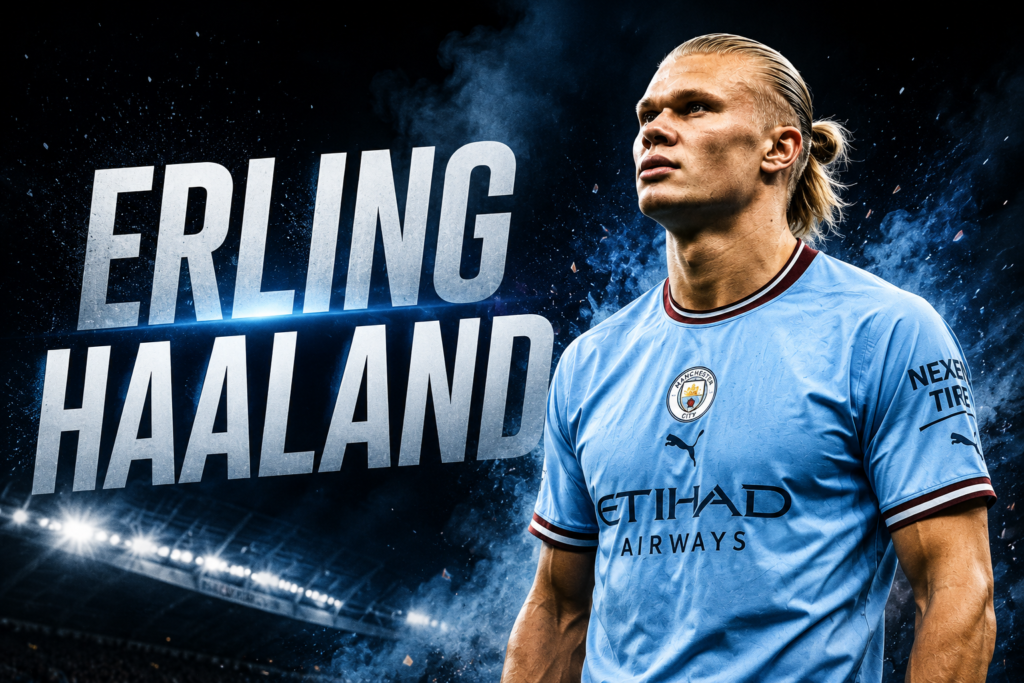
In December 2025, he became the fastest player to reach 100 Premier League goals, achieving the milestone in just 111 appearances — surpassing Alan Shearer’s record set after 124 matches. According to the TIME100 Most Influential People in Sports 2026, his 27 league goals that season earned him his third consecutive Golden Boot — a feat that puts him in company very few strikers in history have kept.
The 2025–26 season saw him register 38 goals from 52 appearances across all competitions for Manchester City, helping the club win the FA Cup. He had previously broken the record for most goals in a single Premier League season and became the fastest player to reach 50 Champions League goals, doing so in just 49 matches.
For Norway, the story is equally staggering. On 11 October 2025, he scored a hat-trick against Israel and became the fastest player in the 21st century to reach 50 international goals — breaking Harry Kane’s record by achieving the milestone in just 46 matches compared to Kane’s 71. He is only the sixth player in history to reach 50 international goals in under 50 appearances.
The World Cup dream — 28 years in the making
Here is where the story becomes something more than statistics.
Norway had not qualified for a World Cup since 1998 — before Haaland was even born. For an entire generation of Norwegian football fans, the World Cup was something you watched other countries play in. On 16 November 2025, Haaland scored twice in a 4–1 win over Italy, securing Norway’s place at the 2026 FIFA World Cup — their first appearance in 28 years.
He did not just score the goals that got them there. He scored 21 goals in 14 qualifying matches — an almost incomprehensible ratio that carried an entire nation on his back.
When the World Cup finally arrived, Haaland wore “Braut Haaland” on the back of his Norway shirt — a tribute to his mother’s family name, honouring the other side of his identity. It was a quiet, powerful statement from a man who has never forgotten where he came from.
At the 2026 World Cup, he scored four goals in his first two matches — back-to-back braces against Iraq and Senegal — helping Norway reach the knockout stage for the first time since 1994. The night before Norway’s round of 32 clash against Ivory Coast, he posted two words on social media that stopped the internet:
“Keep dreaming. 🇳🇴❤️”
Two words. An entire philosophy.
The mindset behind the machine
What separates Haaland from other elite footballers is not his size, his speed, or even his finishing — though all three are extraordinary. It is his relationship with simplicity.
He has said that he does not fully understand what he does when he scores. “I’m just really good at scoring goals. I don’t know what I’m doing, but that’s just how it is.” That is not false modesty. It is the voice of someone who has practised something so deeply that it has become instinct — no longer thought, just response.
He is also remarkably grounded for someone of his stature. When asked whether Norway could win the World Cup, he said plainly: “Norway will never win the World Cup. If we qualify, it would be like another big nation winning it — the biggest party ever.” He knew the ceiling. He chased it anyway.
That is perhaps the most transferable lesson from his story. He did not grow up in a football powerhouse. He did not have the systems, the academies, or the infrastructure that players from Brazil, Spain, or England take for granted. He had Bryne FK, a dairy mural, and an obsession. And today a kid from Australia walks around America trying to look like him.
What Haaland teaches us about our own dreams
The mindset lesson from Erling Haaland’s story is not “work hard and you will become the best footballer in the world.” That is not the point.
The point is this: he identified one thing he wanted to be exceptional at. He built his entire life around that one thing. He fixed what was broken — his stride, his finishing, his positioning. He showed up in a small town with no shortcuts and no audience. He kept going until the world had no choice but to watch.
There is a version of this story in every field. The entrepreneur who started in a one-room flat. The writer who spent years sending manuscripts nobody read. The athlete who trained in a gym no one visited. The thread connecting all of them — and connecting them to a boy from Bryne — is the same: they decided, completely and without reservation, that the gap between where they were and where they wanted to be was closable. And then they got to work closing it.
Whatever your version of the dairy mural is — the thing you are quietly building in your corner of the world — keep this close:
The world does not discover you. You show up until it has no choice.
Keep dreaming — because Haaland did
At 25 years old, Erling Haaland has already rewritten records that stood for decades. He came from a town most people outside Norway could not place on a map. He wore his mother’s name on his back at the biggest tournament in football. He carried a nation that had waited 28 years for this moment.
And before the most important match of his career, he did not post tactics or training clips. He posted two words and a Norwegian flag.
Keep dreaming.
That is the whole lesson. That is the whole story.
Enjoyed this? Subscribe to the TheMindPole newsletter to get weekly stories on the mindset behind the world’s greatest performers — delivered directly to your inbox.