
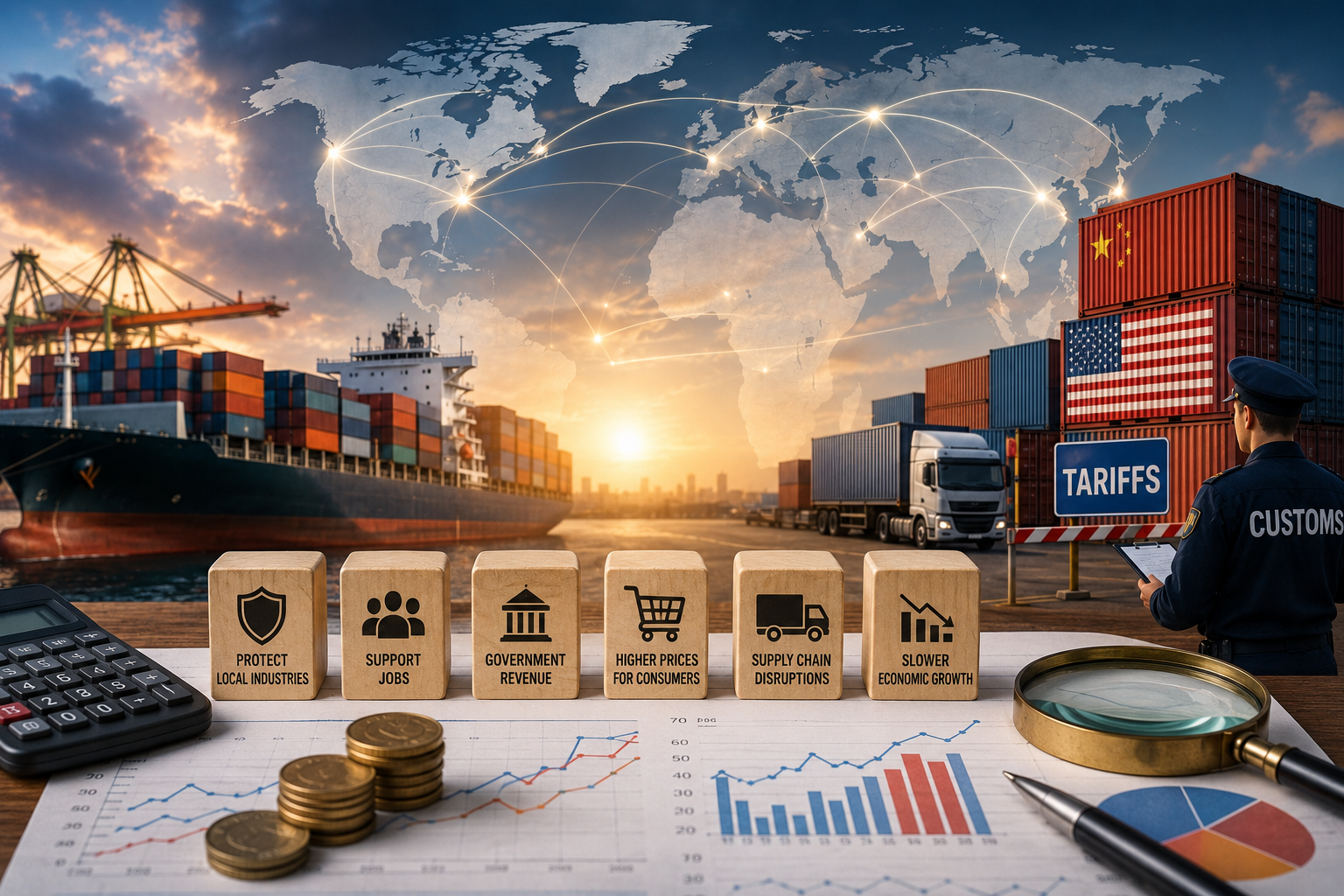
Most people never pay a tariff directly and are unaware of how tariffs affect prices.
You won’t see it listed on a shopping bill. It won’t appear as a separate line item on your salary slip. There is no monthly notification telling you how tariffs affect prices that how it has affected your finances.
And yet, tariffs quietly influence the price of the smartphone in your pocket, the car parked outside your home, the television in your living room, and even the clothes hanging in your wardrobe.
There’s a good chance you’ve paid for a tariff without ever realising it.
That’s what makes tariffs one of the most powerful — and least understood — economic forces in the world today.
A Tax That Travels
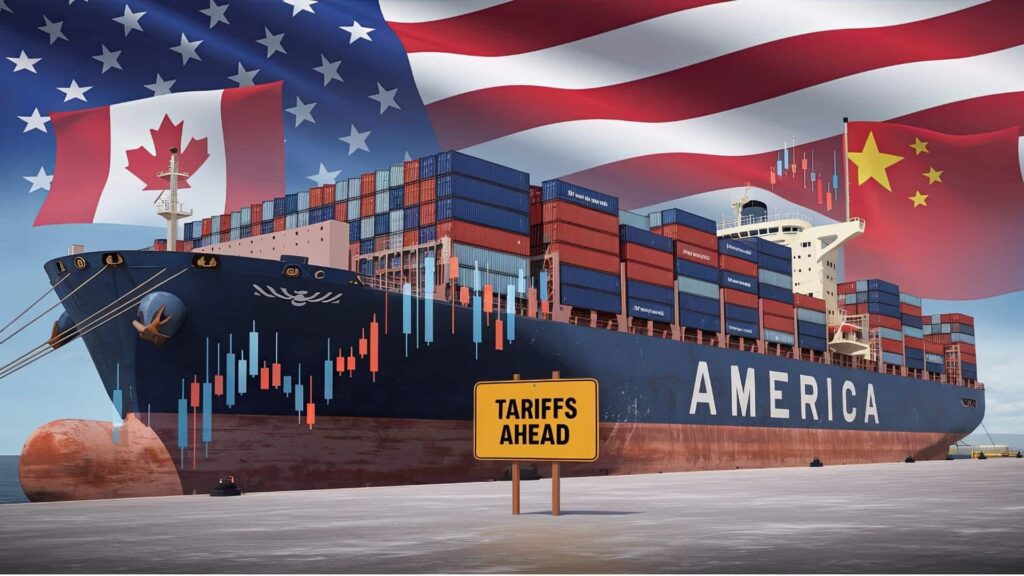
At its simplest, a tariff is a tax imposed on imported goods.
Imagine a company imports a laptop worth ₹50,000. If the government imposes a 10% tariff, the importer now pays an additional ₹5,000 in duty.
The obvious question: who actually pays that ₹5,000?
In theory, the importer does. In reality, the answer is far more complicated — and the evidence from 2025 is now quite clear.
According to research from the Federal Reserve Bank of New York, American consumers and companies absorbed roughly 90% of the cost of the tariffs imposed in 2025, not the foreign countries they were supposedly targeting. A 10% tariff resulted in only a 0.6 percentage-point reduction in foreign export prices — meaning exporters barely lowered their prices, and the burden fell almost entirely on the importing side.
The nonpartisan Tax Foundation estimated that Trump’s tariffs amounted to a tax increase of $1,000 per American household in 2025, rising to an expected $1,300 in 2026 — making them the largest U.S. tax increase since 1993.
This is why economists consistently call tariffs a “hidden tax.” The cost is real. The invoice just never arrives with that label.
The Smartphone Journey
It’s not just physical goods getting expensive — the cost of your digital life is quietly rising too.
Take a smartphone. Most people imagine it is built in one country and shipped to another. The reality is far more fragmented.
The processor may be designed in the United States, manufactured in Taiwan, packaged in Malaysia, assembled in China or Vietnam, and sold in India or Europe. Each component crosses multiple borders before the finished product reaches a store shelf.
A tariff imposed at any stage can increase costs across the entire chain — and today’s tariff environment is unusually severe.
By mid-2025, the U.S. effective tariff rate had risen to 18.6%, the highest level since 1933. That’s not a footnote — it represents a fundamental shift in how global trade is taxed, one that affects virtually every category of imported goods, from electronics and automobiles to furniture and food.
Harvard Business School research tracking retail prices found that tariff costs were gradually and steadily transmitted to U.S. consumers, with a cumulative contribution of 0.7 percentage points to the all-items Consumer Price Index by September 2025. Without those tariffs, annual U.S. inflation — which stood at 2.9% in August 2025 — would have been closer to 2.2%.
One finding from that research deserves special attention: cheaper product varieties saw the highest price increases, rising at an average of 5% compared to around 2.5% for premium products. The reason is straightforward — budget goods have thin margins, leaving retailers with less room to absorb the shock. Since lower-income households disproportionately buy cheaper goods, tariffs function as a regressive tax: the less you earn, the harder the hit.
Why Governments Use Tariffs Anyway
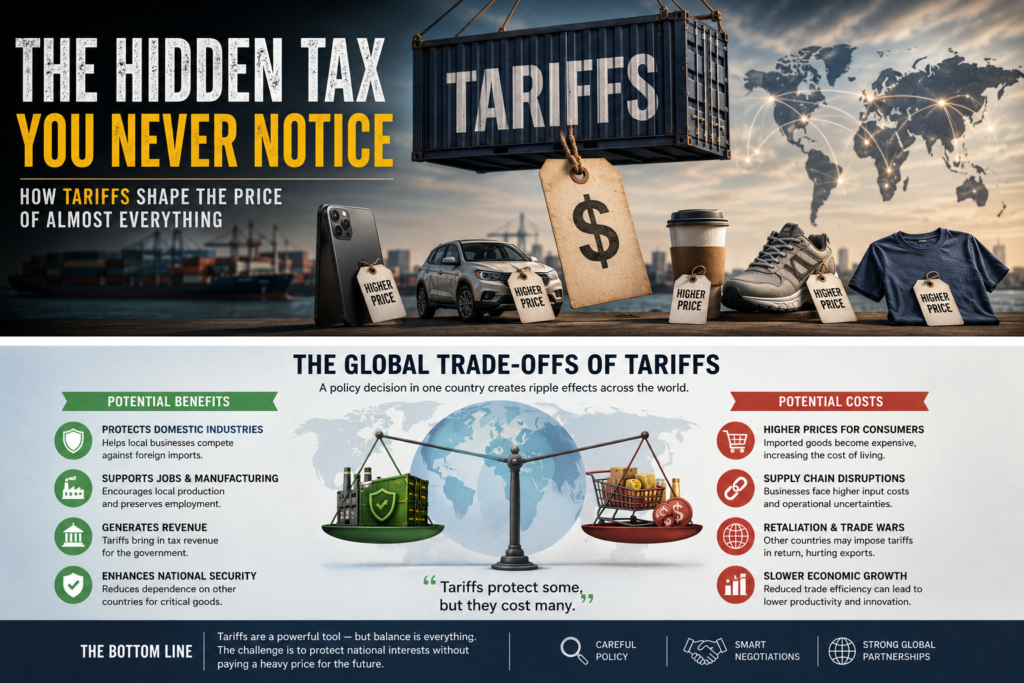
If tariffs make products more expensive, why do governments keep reaching for them?
Because tariffs serve multiple purposes simultaneously:
- Protecting domestic industries from foreign competitors who benefit from lower wages or government subsidies
- Generating government revenue, particularly in economies where income tax collection is limited
- Responding to trade grievances — countervailing duties on subsidised imports, anti-dumping measures on artificially cheap goods
- Geopolitical signalling — punishing allies or rivals without deploying military force
- Rebuilding strategic capacity in semiconductors, pharmaceuticals, clean energy, and critical minerals
The debate between free traders and protectionists is genuine, and both sides have valid points. Open trade lowers prices and raises living standards broadly. But it can also hollow out industries, concentrate wealth unevenly, and create dangerous strategic dependencies — as many countries discovered when COVID-19 disrupted pharmaceutical and semiconductor supply chains.
What I find frustrating, however, is when tariffs are presented as having no cost, or as a cost borne entirely by foreign nations. The evidence is unambiguous on this point. Tariffs are a tax, and like most taxes, consumers pay most of it.
The US–China Trade War: A Case Study in Escalation
The most consequential tariff battle of the modern era has been between the United States and China — and 2025 took it to extraordinary levels.
At its peak, U.S. tariffs on Chinese goods reached 145%. China retaliated with tariffs of 125% on American goods. In May 2025, both sides agreed to a partial rollback — to 30% and 10% respectively — as part of a 90-day negotiating truce. But analysts noted that even these “reduced” rates remain far above historical norms, and negotiations remain unresolved.
The scale of disruption is significant. Global trade flows are projected to contract by 5.5% to 8.5% relative to pre-shock levels. Sectors most exposed to international supply chains — transport equipment and electronics — face contractions of 16% and 12% respectively in scenarios involving full tariffs and retaliation.
Perhaps the most striking data point: U.S. imports from China have fallen back to near-2001 levels — the year China joined the World Trade Organisation. Harvard Business School research found that this “great reallocation” was accelerated by the 2025 tariffs, with sourcing shifting decisively toward Vietnam, Mexico, India, and other lower-tariff countries.
The trade war started between two countries. Its consequences are now spread across the entire global economy. These trade pressures have also sent gold prices surging to record highs as investors seek safer assets.
What This Means for India
India finds itself at a fascinating — and uncomfortable — intersection of this global trade reconfiguration.
On one hand, India is a potential beneficiary. As companies diversify away from China, India’s manufacturing sector, particularly in electronics, textiles, auto components, and pharmaceuticals, stands to attract new investment and orders.
On the other hand, India itself has been hit with punishing U.S. tariffs. Following “Liberation Day” announcements in April 2025, U.S. tariffs on most Indian goods rose to 50% by August 2025 — among the highest rates imposed on any major trade partner. Sectors most at risk include gems and jewellery, textiles, auto components, and leather goods, which collectively account for over 55% of India’s exports to the U.S.
The impact is estimated at around $36 billion, or approximately 0.9% of GDP, according to economists at Nirmal Bank. For the gem and jewellery industry alone, around 175,000 workers face direct employment risk. Spice exporters in Gujarat and Andhra Pradesh have already reported difficulty moving goods.
India’s pharmaceutical sector — which supplies roughly 50% of the U.S. generic drug market — has so far been exempt from the tariffs, a quiet acknowledgement that even the most aggressive trade policy has limits when strategic dependencies are too great.
India responded by cutting consumption taxes on hundreds of goods to stimulate domestic demand, a sensible counter-move, but one that underscores how tariffs imposed thousands of miles away can force domestic economic adjustments at home.
The Ripple Effect Nobody Sees
When people hear “tariff,” they picture cargo ships and customs offices.
The reality reaches far deeper.
A furniture manufacturer that imports wood fittings sees input costs rise. An automobile company dependent on imported electronic components faces margin compression. A clothing brand sourcing fabric internationally has to choose between raising prices and absorbing losses.
Federal Reserve research published in April 2026 found that tariffs implemented through November 2025 had raised core goods prices by 3.1%, accounting for the entirety of excess inflation in that category and contributing 0.8 percentage points to core PCE inflation overall. The pass-through, the researchers concluded, was now effectively complete.
What this means in plain terms: whatever protection or revenue the tariffs were supposed to generate, consumers have already paid for it in higher prices.
Winners, Losers, and the Trade-offs Nobody Advertises
Every tariff creates winners and losers. Honest policy analysis requires acknowledging both.
Potential winners:
- Domestic manufacturers shielded from foreign competition
- Industries receiving implicit government support through higher import barriers
- Governments collecting tariff revenue (the U.S. is projected to collect $2.8 trillion over 2026–35)
- Countries like Vietnam and India attracting supply-chain diversification
Potential losers:
- Import-dependent businesses facing higher input costs
- Exporters subject to retaliation in foreign markets
- Consumers paying more for goods across most categories
- Smaller firms with no political leverage to seek exemptions
- Lower-income households hit hardest by price increases on budget goods
The asymmetry here matters: the benefits of tariff protection are concentrated in specific industries and visible to politicians. The costs are diffuse, spread across millions of households in tiny increments that are easy to overlook. This is precisely why tariff policy is so prone to capture by narrow interests — the winners lobby loudly, the losers rarely organise.
The New Era of Strategic Trade
For decades, globalisation was guided by a single principle: produce wherever costs are lowest and trade will make everyone better off.
That consensus has fractured.
Governments today care not just about price efficiency but about supply-chain resilience, technological sovereignty, and geopolitical independence. The U.S. wants to rebuild semiconductor fabrication. China is pushing for self-sufficiency in advanced chips. India is trying to become a global electronics hub. Europe is rethinking energy dependence.
Tariffs have become a tool in this larger contest — not just a way to protect a steel mill or collect customs revenue, but a way to reshape the industrial geography of the world.
Whether this transition is ultimately beneficial depends on what you believe matters most. If supply-chain resilience and strategic independence are worth paying for, then some tariff costs may be justifiable. But the evidence from 2025 makes one thing impossible to ignore: those costs are real, they are substantial, and ordinary consumers bear most of them.
An Honest Assessment
Here is my view, for what it’s worth.
Tariffs are not inherently good or bad. Like most economic tools, their value depends on what they’re trying to achieve, how precisely they’re designed, and how tariffs affect prices which are honestly acknowledged.
What I find troubling about the current wave of tariff policy — particularly in the United States — is the persistent claim that the cost falls on foreign countries rather than domestic consumers. The data from multiple independent institutions, the Federal Reserve, Harvard Business School, the Yale Budget Lab, the IMF — is consistent and clear. American households paid roughly $1,000 more in 2025 because of tariffs. That number is expected to rise.
There may be legitimate reasons to accept that cost. Strategic independence from adversarial supply chains is a real concern. Rebuilding manufacturing capacity that was offshored over decades is a genuine policy goal. But policymakers who insist tariffs are “free” — that other countries simply absorb them — are not being straight with their citizens.
Good trade policy requires honest trade-offs, not convenient fictions.
The Real Cost of a Tariff
The next time you hear politicians debating tariffs, remember this: the debate is not really about taxes. It’s about priorities.
Should countries value cheaper goods or stronger domestic industries? Efficiency or resilience? Economic integration or strategic independence?
These are genuine, difficult questions — and different societies can reasonably reach different answers. But there is one point that is not genuinely debatable.
Tariffs don’t stay at ports. How tariffs affect prices is they travel through factories, supply chains, businesses, and households. Eventually, they reach all of us. Usually without us ever noticing why our bill went up.
The figures cited in this article draw on research from the Federal Reserve Bank of New York, the Federal Reserve Board, Harvard Business School’s Pricing Lab, Yale’s Budget Lab, the Tax Foundation, CEPR, and the IMF. All data reflects conditions through early 2026.