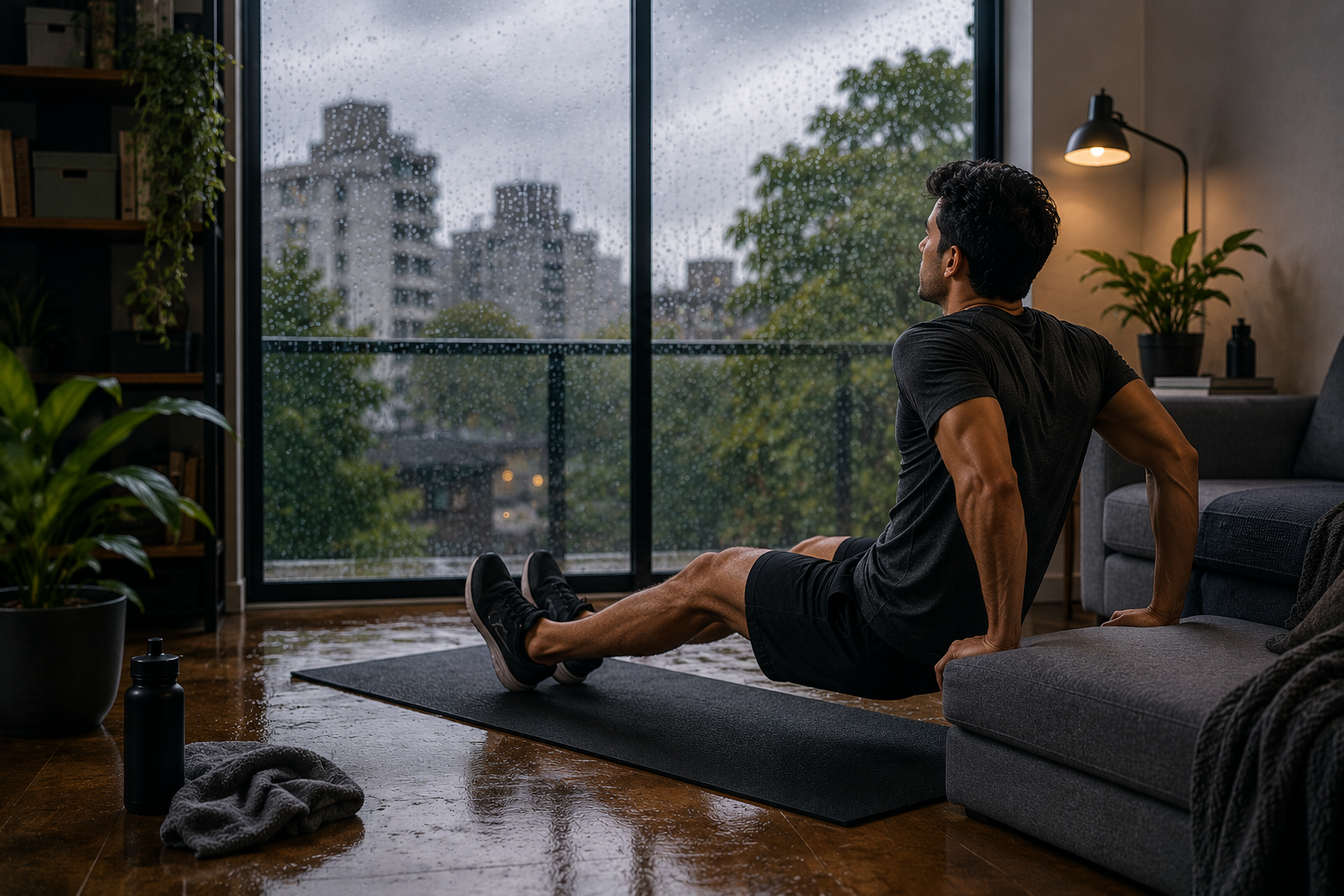
The alarm goes off. It’s raining outside. The bed feels three times heavier than usual. Your workout plan suddenly feels very optional.
Sound familiar?
Every monsoon season, millions of people across India experience the same thing — a deep, almost magnetic pull toward doing nothing. And here’s the thing: it’s not laziness. There’s real science behind it. But here’s the other thing: knowing why it happens is exactly what gives you the power to beat it.
Why Rain Makes You Feel Like Doing Nothing
1. Light Changes Everything
When monsoon clouds block sunlight, your brain responds by producing more melatonin — the hormone that signals your body to sleep and rest. Less light literally tells your brain it’s time to slow down. This is why you feel drowsy and unmotivated even at 9 AM on a rainy day when you’d normally be alert.
At the same time, serotonin — your brain’s natural mood stabiliser and motivational fuel — drops when sunlight exposure decreases. Lower serotonin means lower drive, lower mood, and a much stronger desire to stay horizontal.
2. Humidity Drains Your Energy Before You Even Start
High humidity makes sweat evaporation less efficient. Your body works harder to cool itself, which means even mild physical exertion feels more exhausting than it normally would. A 30-minute walk in 85% humidity can feel like a 45-minute one. Your body isn’t broken — it’s just working in a harder environment.
3. Barometric Pressure Drops Before Rain
Before and during heavy rain, atmospheric pressure drops. Studies show this can cause subtle changes in joint fluid pressure, leading to mild achiness and fatigue — particularly in people who are already sedentary. Your body senses the weather before you do, and it reacts. Research published in the National Library of Medicine confirms this link between weather changes and perceived physical fatigue.
4. Your Routine Gets Disrupted
For most people, outdoor exercise — morning walks, runs, cycling — becomes difficult or impossible during heavy monsoon. When the default routine disappears, motivation often disappears with it. This is a habit problem more than a physical one, and it’s the most fixable of all four causes.
The Monsoon Fitness Problem in India Specifically
India’s monsoon is not a light drizzle season. Across most of the country, it means weeks of continuous heavy rainfall, waterlogged roads, humid indoor spaces, and a genuine disruption of daily movement patterns.
Add to this that most Indian homes aren’t built around indoor exercise spaces — no home gyms, limited yoga mat areas, and gyms that can feel distant and unwelcoming when you’re already battling fatigue. The result is that millions of people simply stop moving for three to four months and then wonder why they feel sluggish heading into October.
It doesn’t have to be this way.
How to Beat Monsoon Laziness: A Practical Breakdown

Anchor Your Morning Differently
If your usual trigger for working out was stepping outside, you need a new trigger. On rainy days, set a non-negotiable morning ritual that doesn’t depend on weather — a glass of warm water, five minutes of stretching, or a body-weight circuit before you check your phone. Small anchors keep discipline alive when motivation disappears.
“Discipline is doing what needs to be done even when the weather tells you otherwise.“
Shift to Indoor Workout Routines
You don’t need a gym or equipment to stay fit during monsoon. Here’s a minimal, effective indoor circuit that takes 25 minutes:
The Monsoon 25 (no equipment needed):
- Jumping jacks — 3 sets of 30
- Push-ups — 3 sets of 15
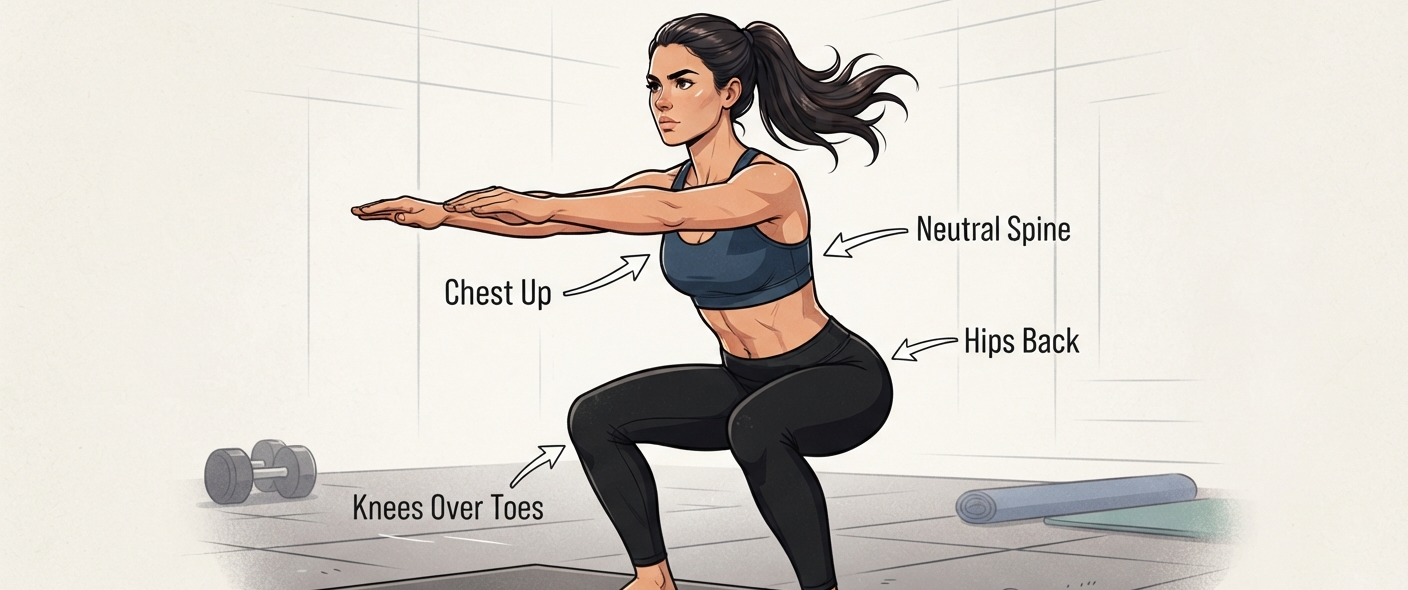
- Bodyweight squats — 3 sets of 20
- Plank hold — 3 sets of 45 seconds
- Mountain climbers — 3 sets of 20 reps
- Glute bridges — 3 sets of 15
Rest 30 seconds between sets. Done. That’s a full-body session in your living room, regardless of what’s happening outside.
Use Yoga as a Monsoon Tool
Monsoon is genuinely one of the best seasons for yoga — the humidity keeps muscles warm and more flexible than usual, making deeper stretches more accessible. A 20-minute morning yoga flow (Surya Namaskar is ideal) also helps regulate serotonin and mood, directly countering the light-depletion effect. The WHO recommends at least 150 minutes of moderate physical activity per week regardless of season — yoga counts.
Adjust Your Nutrition for Monsoon
Your body’s immune system is under more pressure during monsoon — humidity creates ideal conditions for bacteria and viral infections. What you eat matters more, not less, during this season:
- Warm, cooked foods over raw salads (easier to digest, lower infection risk)
- Ginger and turmeric — both natural anti-inflammatories with immune-boosting properties
- Haldi doodh (golden milk) before bed — not just tradition, it genuinely helps
- Avoid street food during peak monsoon — contamination risk is highest
- Stay hydrated — the cool weather tricks you into drinking less water, but your body still needs it
Protect Your Mental Energy Too
Low mood during monsoon isn’t weakness — it’s biology. Counteract it deliberately:
- Get whatever natural light is available, even through a window
- Maintain a consistent sleep schedule (melatonin disruption gets worse with irregular sleep)
- Stay socially connected — isolation compounds low mood
- Keep your phone use intentional — endless scrolling on grey days feeds low energy rather than resolving it
The Mindset Shift That Changes Everything
Here’s what separates people who stay fit through monsoon from those who don’t: they stop making their workout conditional on feeling motivated.
Motivation is a weather-dependent resource. Discipline isn’t.
The rain isn’t the problem. Waiting for the rain to stop before you start moving again — that’s the problem. The monsoon lasts four months. Four months of reduced movement, reduced sleep quality, and reduced nutrition add up to a body that feels genuinely older by October.
Choose differently. Not because it’s easy on rainy days. Because the version of you that keeps going through four months of grey skies is a fundamentally different person than the one who waits it out.
Quick Recap
- Rain reduces sunlight → less serotonin and more melatonin → fatigue and low motivation
- High humidity makes exertion feel harder than it is
- Barometric pressure changes cause physical fatigue before rain even starts
- The solution is anchor habits, indoor routines, yoga, adjusted nutrition, and consistent sleep
- Discipline beats motivation every monsoon — and every season
Read next: [In greatest stories series about The Man Who Quit, Came Back, and Became Immortal – Lionel Messi]